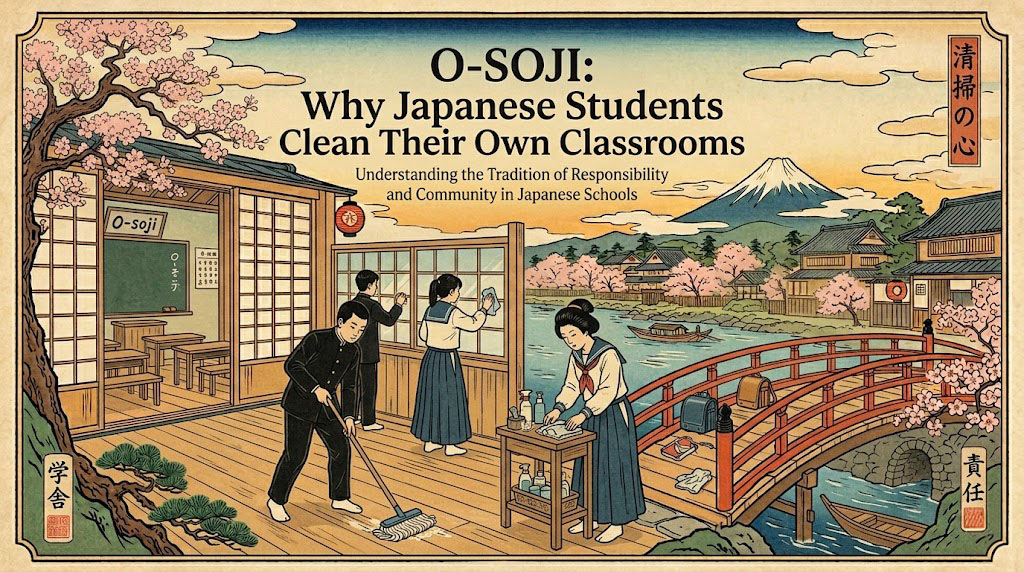
O-soji meaning in Japanese is “great cleaning” — a school tradition where students clean their own classrooms and school grounds, teaching values of responsibility and community from an early age.
Imagine a school where, at the end of the day, instead of waiting for a janitorial staff, students themselves pick up brooms, dustpans, and rags, meticulously cleaning every corner of their classroom. For many in the Western world, this might seem like an unusual, perhaps even burdensome, practice. Yet, in Japan, this daily ritual is a deeply ingrained and cherished part of the educational experience, a custom known as o-soji (お掃除, ‘the honored cleaning’). Far from being just a chore, it’s a foundational pillar of character development, fostering a profound sense of responsibility, community, and respect for one’s environment. This isn’t merely about tidiness; it’s a reflection of ancient spiritual beliefs and a unique approach to education that shapes the very fabric of Japanese society. Join us as we sweep away assumptions and delve into the captivating cultural and spiritual reasons why Japanese students clean their own classrooms.
Quick Facts: O-soji (Classroom Cleaning)
| Detail | Information |
|---|---|
| Japanese Name | お掃除 (O-soji) |
| Type / Category | Cultural Practice / Educational Philosophy |
| Origin | Deeply rooted in Buddhist monastic traditions and post-WWII educational reforms |
| Element / Domain | Responsibility, community, respect, mindfulness, purification |
| Known For | Instilling discipline, teamwork, humility, gratitude, and environmental care |
| Modern Appearances | Daily school life across Japan, documentaries, cultural exchange programs, featured in anime and manga |
What Is O-soji?
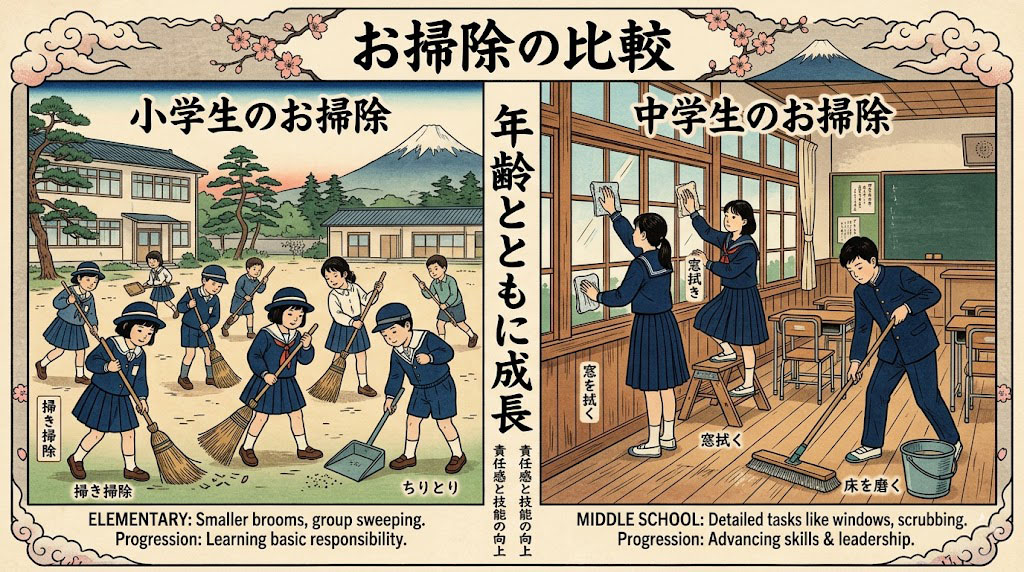
At its core, o-soji is the practice of students collectively cleaning their school environment, most notably their own classrooms, on a daily basis. It’s a mandated activity in virtually all Japanese schools, from elementary through high school, and it typically takes place for about 15-20 minutes at the end of the school day. This isn’t a token effort; students are expected to clean thoroughly, from sweeping floors and emptying trash cans to wiping down desks, scrubbing toilets, and even tidying school grounds. Teachers often participate alongside students, leading by example and guiding the process.
However, o-soji transcends the utilitarian act of cleaning. In the Japanese worldview, cleanliness is intimately linked with spiritual purity and moral rectitude. The act of cleaning is seen as a way to purify not just the physical space, but also the mind and spirit. It cultivates an appreciation for one’s surroundings, fosters a sense of collective ownership, and nurtures virtues like humility and discipline. This holistic approach transforms a seemingly mundane task into a powerful educational tool that shapes the character of future generations.
Origins and History
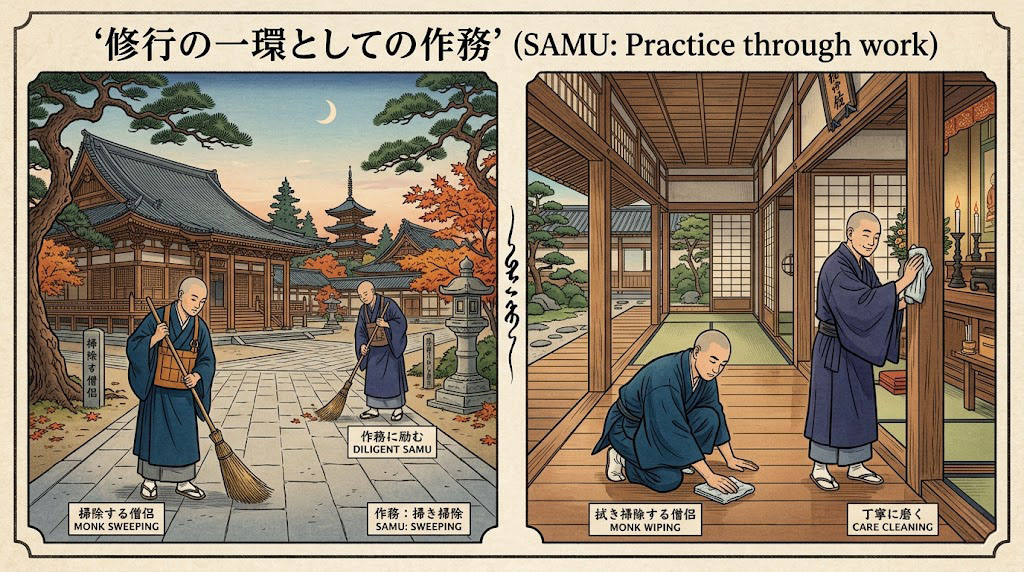
The roots of o-soji can be traced back centuries, intertwining with Japan’s major spiritual traditions. Buddhism, particularly Zen Buddhism, emphasizes cleaning as a form of meditation and spiritual training. Monks engage in samu (作務, ‘physical work for spiritual training’), which often involves cleaning, sweeping, and gardening, as a path to enlightenment. It’s believed that purifying one’s environment also purifies one’s mind, fostering mindfulness and humility. This monastic tradition laid a strong philosophical groundwork for viewing cleaning as a noble and spiritually enriching activity.
Shinto, Japan’s indigenous religion, also plays a crucial role. Central to Shinto is the concept of kegare (穢れ, ‘pollution’ or ‘defilement’) and the practice of harae (祓え, ‘purification’) to remove it. A clean environment is seen as pure and inviting to the kami (神, deities). While o-soji is not a direct religious ritual, the cultural emphasis on maintaining purity and order in physical spaces aligns perfectly with these ancient beliefs. In the modern era, o-soji became formally integrated into the education system during the post-World War II reforms, driven by a desire to rebuild society by instilling strong moral character, civic responsibility, and a sense of community among students. It was a conscious effort to move beyond rote learning and cultivate well-rounded individuals who understood their role within a larger collective.
O-soji’s Practice and Impact
In practice, o-soji is a highly organized and structured activity. Each class is typically divided into small groups, often referred to as toban (当番, ‘duty groups’), with specific cleaning responsibilities assigned to each group for a rotating period. One group might be responsible for sweeping, another for wiping desks, a third for cleaning windows, and so on. Students don aprons and sometimes headscarves, using basic cleaning tools like brooms, dustpans, wet rags, and buckets. The process is collaborative, with students working together, often in silence or quiet conversation, under the gentle guidance of their teacher.
Educational Philosophy and Personal Growth
The ‘powers’ of o-soji lie not in any mystical ability, but in its profound impact on personal development and social cohesion. It teaches invaluable life skills: how to properly clean, how to work effectively as part of a team, and how to take responsibility for shared spaces. Beyond these practical aspects, it instills humility, as every student, regardless of academic prowess or social standing, participates equally in the task. It fosters a sense of gratitude and respect for the school environment and the people who maintain it. The collective effort reinforces shūdan ishiki (集団意識, ‘group consciousness’), emphasizing the importance of the group’s well-being over individual preferences, a cornerstone of Japanese societal values.
Environmental Respect and Mindfulness
Beyond personal growth, o-soji cultivates a deep respect for the environment and the concept of mottainai (もったいない), a Japanese term that conveys a sense of regret concerning waste and an appreciation for the intrinsic value of things. By actively cleaning and maintaining their surroundings, students develop a tangible connection to their space, understanding the effort required to keep it pristine. This hands-on involvement makes them less likely to litter or damage property, as they directly experience the consequence of neglect and the reward of cleanliness. It’s a practical application of mindfulness, where the act of cleaning becomes a focused, present-moment activity, echoing the Buddhist practice of ichigyo zammai (一行三昧, ‘single-minded devotion to one task’).
O-soji vs Similar Concepts / Traditions
| Feature | O-soji (Japanese Classroom Cleaning) | Shinto Harae/Misogi | Buddhist Cleaning as Meditation |
|---|---|---|---|
| Type | Educational & Cultural Practice | Ritual Purification | Spiritual Discipline |
| Domain | Physical spaces (schools, homes), personal character | Sacred spaces, individuals (from kegare) | Mind, spirit, monastic environment |
| Danger Level | None (physical exertion only) | None (spiritual purification) | None (spiritual exertion only) |
| How to appease | Through diligent, communal effort; maintaining cleanliness | Through specific rituals, offerings, chanting, ablution (e.g., misogi) | Through focused, mindful physical labor; letting go of attachments |
| Modern pop culture | Depicted in Slice-of-life anime (e.g., K-On!, Lucky Star), educational documentaries | Reflected in shrine visits, festivals (e.g., purification rituals at festivals), historical dramas | Seen in Zen temple practices, martial arts films, books on mindfulness |
O-soji in Modern Japan and Pop Culture
Even in the 21st century, o-soji remains a steadfast tradition in Japanese schools, celebrated as an indispensable part of a child’s holistic development. Its continued practice highlights Japan’s enduring commitment to collective responsibility, respect, and a deep appreciation for one’s environment. While the world around it modernizes, the daily rhythm of students cleaning their classrooms serves as a quiet, powerful testament to deeply held cultural values. This practice continues to resonate globally, inspiring admiration and curiosity from educators and parents worldwide who seek to understand its benefits.
In modern Japanese pop culture, o-soji is a common and often heartwarming trope. It appears frequently in anime and manga, particularly in ‘slice-of-life’ genres set in schools. Characters are routinely shown sweeping classrooms, wiping blackboards, or tidying school grounds, often using these moments for character interaction, comedic relief, or to subtly convey character traits like diligence or camaraderie. These depictions reinforce the normalcy and positive perception of o-soji within Japanese society, making it an easily recognizable and beloved element of school life, both domestically and internationally. It serves as a visual shorthand for depicting typical Japanese school routines and the values they embody, reminding audiences of the unique emphasis on collective well-being and responsibility.
Where to Experience This in Japan
Directly participating in o-soji as a visitor is generally not possible, as it’s an intimate part of daily school life. However, you can certainly observe the cleanliness and order that this practice fosters. Many schools are visible from public areas, offering glimpses of students engaging in various activities during the school day. To connect with the spiritual roots, consider visiting a Zen Buddhist temple that offers short meditation retreats or workshops, where tasks like sweeping and cleaning (samu) are often integrated into the experience. The cultural reverence for tidiness and respect for public spaces can also be observed everywhere, from meticulously maintained public parks to pristine train stations, reflecting the widespread influence of the o-soji mindset beyond school gates.
Frequently Asked Questions
Why do Japanese students clean their own classrooms instead of having janitors?
Japanese students clean their own classrooms as part of a comprehensive educational philosophy known as o-soji, which goes beyond mere hygiene. This practice is designed to instill a profound sense of responsibility, humility, and community among students. It teaches them to appreciate their environment, take ownership of shared spaces, and understand the value of hard work, rather than relying solely on janitorial staff.
Is classroom cleaning still a common practice in all Japanese schools today?
Yes, o-soji remains a deeply ingrained and widespread practice across virtually all elementary, middle, and high schools throughout Japan. It is considered an essential component of the national curriculum and character education. While specific schedules or tasks might vary slightly by school, the core tradition of students cleaning their own environment continues uninterrupted.
Do teachers also participate in the cleaning with their students?
Absolutely. It is very common for teachers to actively participate in o-soji alongside their students. This participation serves as a powerful example of leadership and teamwork, demonstrating that cleaning is a shared responsibility regardless of one’s position. Teachers guide students, offer advice, and work diligently, reinforcing the idea that everyone contributes to maintaining a clean and respectful environment.
What kinds of cleaning tools do Japanese students typically use for o-soji?
Japanese students typically use a range of common but effective cleaning tools for o-soji. These include traditional brooms (often made of natural fibers), dustpans, wet rags for wiping surfaces, buckets for water, and sometimes specific cleaning solutions. For toilet cleaning, brushes and detergents are provided. The emphasis is on thorough, hands-on cleaning rather than reliance on complex machinery.