Mottainai meaning in Japanese captures a profound cultural attitude toward waste — a word that expresses regret over unnecessary waste and embodies Japan’s deep respect for resources and the effort behind every object.
Imagine a world where nothing is truly wasted—not food scraps, not worn-out clothes, not even broken pottery. A world where every item, every moment, and every resource is treated with profound respect and gratitude. While modern society often grapples with overwhelming consumption and waste, Japan has long nurtured a philosophy that inherently champions sustainability: Mottainai. More than just a simple command to ‘not waste,’ Mottainai is a deeply ingrained cultural and ethical imperative, a lament for wasted potential and a call for appreciation that predates our contemporary zero-waste movements by centuries. It is a philosophy that transforms regret into action, guiding individuals and communities toward a life of mindful consumption and creative resourcefulness. Prepare to dive into the heart of this ancient Japanese wisdom, understanding how Mottainai shapes daily life and offers powerful lessons for our global future.
Quick Facts: Mottainai (勿体無い)
| Detail | Information |
|---|---|
| Japanese Name | 勿体無い (mottainai) |
| Type / Category | Buddhist Concept / Cultural Philosophy / Ethical Imperative |
| Origin | Roots in Buddhist teachings, evolved into a widespread cultural value |
| Element / Domain | Respect for resources, gratitude, anti-waste, appreciation of intrinsic value, sustainability |
| Known For | Expressing regret over waste (of materials, time, effort, potential), promoting the 4Rs (Reduce, Reuse, Recycle, Repair) |
| Modern Appearances | Environmental movements, public awareness campaigns, sustainable design, international advocacy (e.g., Wangari Maathai) |
What Is Mottainai?
At its core, Mottainai (勿体無い, mottainai) is an expression of regret concerning waste and a profound sense of respect for the inherent value of things. The word itself is a combination of two kanji: mottai (勿体), which refers to the intrinsic value or essence of a thing, and nai (無い), meaning ‘lacking’ or ‘nothing.’ Thus, ‘mottainai’ literally translates to something like ‘lacking essence’ or ‘no intrinsic value,’ but it’s used to express the sentiment, ‘What a waste!’ or ‘Don’t waste!’ This isn’t just about economizing or being thrifty; it’s a deeper, almost spiritual recognition of the energy, effort, and resources that went into creating an item, cultivating food, or even the passage of time. It encourages gratitude and a conscientious approach to consumption, emphasizing that everything has value and should be used to its fullest potential.
This philosophy permeates everyday Japanese life, from the careful arrangement of a bento box to ensure no food is left behind, to the meticulous repair of clothing or household items. It extends beyond material goods to encompass wasted time, talent, or opportunity. To say ‘mottainai’ is to voice an acknowledgement of the inherent worth that something possesses and to lament its squandering. It’s an internal compass guiding people towards thoughtfulness and a deep sense of responsibility for their impact on the world and its resources.
Origins and History
The roots of Mottainai can be traced back to ancient Buddhist teachings, particularly the concept of impermanence (mujo) and the interconnectedness of all things. This worldview fostered a deep appreciation for the cycles of nature and the transient nature of existence, encouraging a respectful relationship with the environment and its limited resources. During Japan’s long history, a scarcity of natural resources, frequent natural disasters, and periods of isolation also cemented the need for resourcefulness and careful stewardship. Farmers, artisans, and households learned to make the absolute most of every material, developing sophisticated techniques for recycling, repairing, and repurposing long before such concepts became trendy globally.
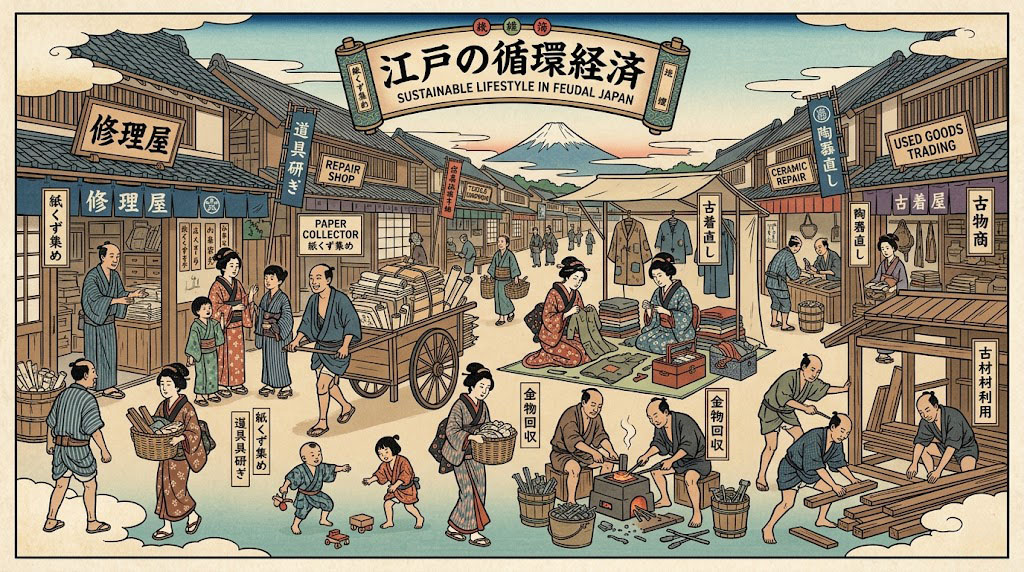
While Buddhist philosophy provided the spiritual framework, the practical application of Mottainai became deeply embedded in daily life through centuries of necessity. The Edo period (1603-1868), for example, is often cited as a prime example of a ‘recycling society.’ Everything from paper and textiles to human waste was collected, processed, and reused. Artisans would specialize in mending pottery, sharpening tools, or repairing wooden items, ensuring that objects had extended lifespans rather than being discarded. This ingrained culture of ‘making do’ and maximizing utility ultimately evolved into the multifaceted concept of Mottainai we understand today, passed down through generations not as a strict rule, but as a guiding principle of gratitude and respect.
Mottainai’s Philosophy and Practice
Mottainai is far more than a simple anti-waste slogan; it’s a dynamic philosophy that manifests through conscious actions and a specific mindset. It encourages individuals to look beyond the immediate utility of an item and consider its full lifecycle, from creation to potential end-of-life. This deep consideration fosters an environment where waste is not merely avoided, but actively grieved, inspiring creative solutions to extend the life and usefulness of everything. It’s a fundamental aspect of Japanese resourcefulness, influencing everything from urban planning to personal consumption habits, constantly seeking ways to minimize impact and maximize value.
The 4 Rs (or 5 Rs in Japan): Reduce, Reuse, Recycle, Repair (and Refuse)
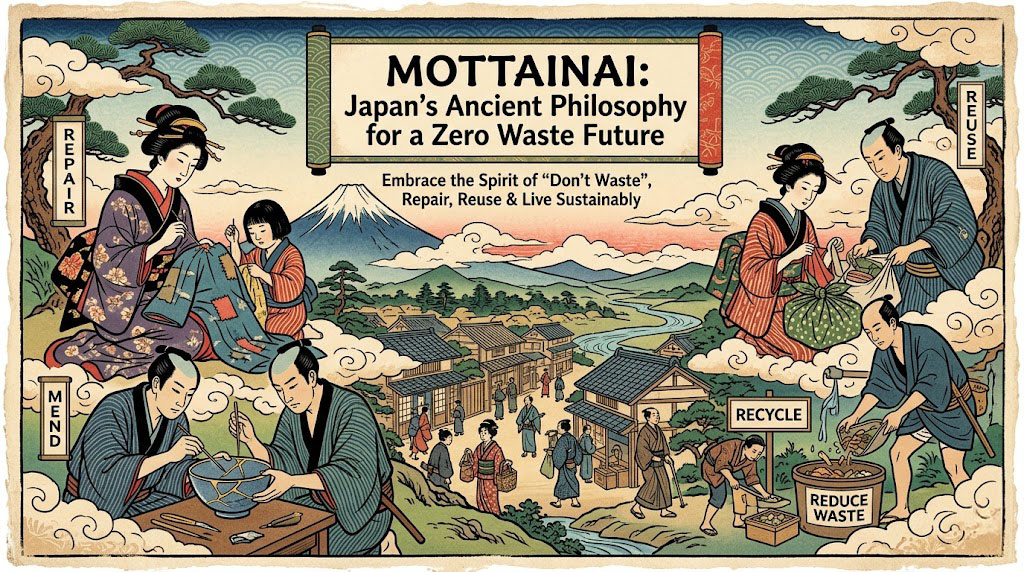
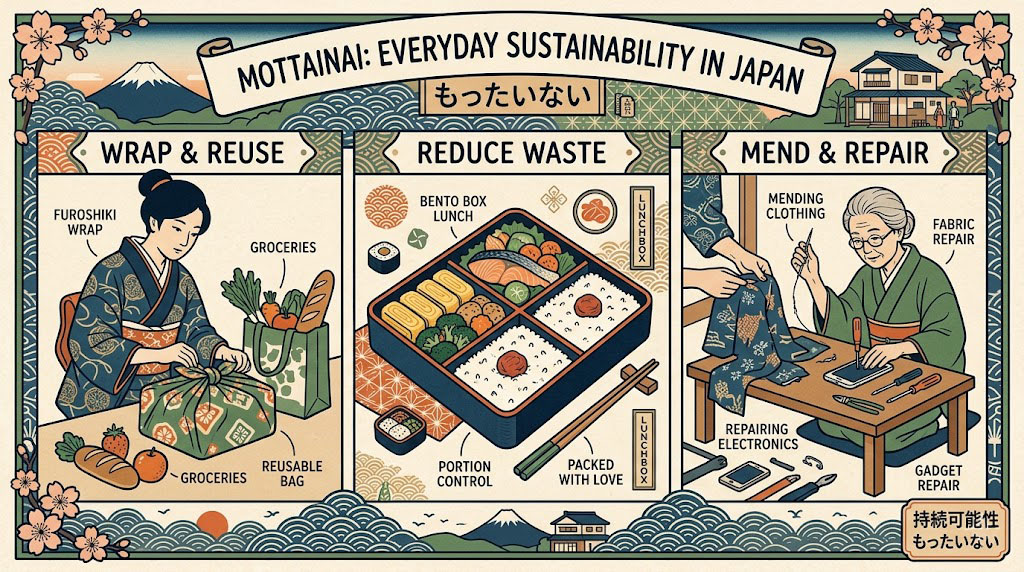
The principles of Mottainai directly underpin the modern ‘4 Rs’ (or often 5 Rs, including Refuse) of waste management. Reduce: By minimizing consumption, one respects the resources that would have been used to create new items. Reuse: Practices like using furoshiki (風呂敷, furoshiki) — traditional Japanese wrapping cloths — instead of disposable bags, or packing homemade bento boxes, exemplify reuse. Recycle: Japan has highly efficient recycling systems, reflecting the Mottainai mindset of diverting materials from landfills. Crucially, Repair: This ‘R’ is deeply cherished. The art of kintsugi (金継ぎ, kintsugi), where broken pottery is mended with gold lacquer, not only restores functionality but highlights the object’s history and imperfections as part of its beauty, making it even more valuable. Finally, the implied ‘Refuse’ is about saying no to unnecessary items, further reducing potential waste at its source.
Beyond Material Waste: Time, Effort, and Potential
The concept of Mottainai extends far beyond physical objects. It equally applies to the squandering of intangible resources. Wasting time, for instance, is considered ‘mottainai’ because time is a finite and precious resource that can never be recovered. This influences everything from punctuality in appointments to efficient work practices. Wasted effort, whether in a poorly executed task or an unfulfilled potential, also elicits the Mottainai sentiment. Consider a child with a unique talent who is not given the opportunity to develop it — this, too, would be viewed as ‘mottainai.’ The philosophy encourages individuals to live mindfully, to make the most of their abilities, and to appreciate the efforts of others, fostering a society that values diligence, perseverance, and the full utilization of every gift, opportunity, and moment.
Mottainai vs Similar Concepts and Traditions
| Feature | Mottainai (勿体無い) | Zen Buddhist Principles | Kintsugi Art (金継ぎ) | Shintoism (Nature Respect) |
|---|---|---|---|---|
| Core Idea | Regret over waste, gratitude for intrinsic value, appreciation for effort | Simplicity, mindfulness, impermanence, non-attachment, emptiness | Repairing broken pottery with gold/silver lacquer, embracing imperfection | Harmony with nature, spiritual value of objects, reverence for kami (spirits) |
| Focus | All resources (material, time, effort, potential) | Inner peace, enlightenment, detachment from material desires | Object repair, aesthetic appreciation of flaws, story of an item | Natural world, sacred spaces, purity, rituals connecting humans and kami |
| Practice | Reduce, reuse, recycle, repair, conscious consumption, efficient use | Meditation (zazen), mindful living, simple diet, self-discipline | Mending broken ceramic/porcelain items, creating new beauty from damage | Observing natural cycles, shrine visits, purification rituals, valuing natural materials |
| Outcome | Sustainability, resourcefulness, gratitude, mindful living, reduced impact | Serenity, wisdom, clarity of mind, liberation from suffering | Extended life of objects, unique aesthetic, philosophical reflection on resilience | Ecological balance, spiritual connection, sense of belonging, respect for life |
Mottainai in Modern Japan and Pop Culture
Today, the concept of Mottainai is more relevant than ever, both within Japan and on the global stage. It has become a rallying cry for environmental movements and sustainable living. In 2005, Nobel Peace Prize laureate Wangari Maathai famously adopted ‘Mottainai’ as a global slogan for environmental protection, bringing international attention to its profound message of waste reduction and resourcefulness. In Japan, government campaigns, educational programs, and corporate initiatives frequently invoke Mottainai to encourage sustainable practices, from energy conservation to food waste reduction. Its principles are visible in the widespread availability of high-quality second-hand goods, the emphasis on meticulous craftsmanship that ensures longevity, and the popularity of repair services. Mottainai resonates deeply because it taps into a universal desire to avoid unnecessary waste and fosters a sense of responsibility towards our planet.
Beyond formal campaigns, Mottainai subtly influences various aspects of Japanese pop culture and daily life. It can be seen in the appreciation for artisanal crafts that are designed to last, the minimalist aesthetics often celebrated in Japanese design, and even in narrative themes within anime or manga that highlight the value of simple living or the impact of environmental negligence. From children’s books teaching the importance of not wasting food to documentaries exploring traditional mending techniques, Mottainai remains a powerful, unspoken force. Its enduring appeal to people worldwide lies in its blend of practicality, ethics, and a timeless wisdom that promotes not just environmental sustainability, but also a more mindful and grateful way of life.
Where to Experience This in Japan
To truly grasp the spirit of Mottainai, immerse yourself in Japanese daily life. Visit local markets where vendors encourage careful selection and minimal packaging. Explore traditional craft shops in Kyoto or Tokyo, where you can find beautifully made items designed for longevity. Many cities offer kintsugi workshops, allowing you to try your hand at repairing broken ceramics. Dive into Japan’s vibrant second-hand culture at stores like Book Off (books, CDs, DVDs) or Hard Off (electronics, furniture) to see how items are given new life. Even observing how Japanese people meticulously separate their waste or carefully present their food reveals the underlying respect and conscious effort inspired by Mottainai.
Frequently Asked Questions
What is the full meaning of the Japanese word Mottainai?
The word Mottainai (勿体無い) carries a deep, nuanced meaning that goes beyond a simple ‘don’t waste.’ It expresses regret or a sense of sorrow over something being wasted or used inefficiently. It encompasses gratitude for the intrinsic value of an object, respect for the resources and effort that went into its creation, and an awareness of its potential. It’s an ethical and emotional response to the squandering of anything valuable, whether tangible (food, materials) or intangible (time, talent, opportunity).
How does Mottainai differ from Western zero-waste movements?
While sharing the goal of waste reduction, Mottainai is distinct from many Western zero-waste movements in its philosophical depth and cultural embeddedness. Western movements often focus on practical methods and environmental impact. Mottainai, however, originates from an older, more spiritual framework (Buddhist teachings) emphasizing gratitude, appreciation for intrinsic value, and the interconnectedness of all things. It’s less about a set of rules and more about a deeply ingrained mindset and emotional response to waste, making it an integral part of Japanese identity rather than just an environmental strategy.
Can Mottainai be applied to things beyond physical objects?
Absolutely. One of the most insightful aspects of Mottainai is its application beyond material waste. It extends to wasting time, talent, energy, and human potential. For example, leaving a task unfinished, not utilizing one’s skills to the fullest, or simply letting time pass idly could all be considered ‘mottainai.’ This broader application highlights a holistic approach to life, encouraging individuals to maximize not just physical resources but also their own capabilities and every moment they are given.
How can I incorporate Mottainai into my daily life outside of Japan?
You can embrace Mottainai by cultivating a conscious attitude towards consumption and resources. Start by practicing the 4 Rs: Reduce what you buy, Reuse items whenever possible (e.g., reusable bags, containers), Repair broken possessions instead of replacing them, and Recycle thoughtfully. Extend this to time and talent—don’t let opportunities pass, use your skills, and appreciate your time. By fostering gratitude for everything you have and lamenting any form of waste, you embody the spirit of Mottainai, contributing to a more sustainable and mindful lifestyle wherever you are in the world.