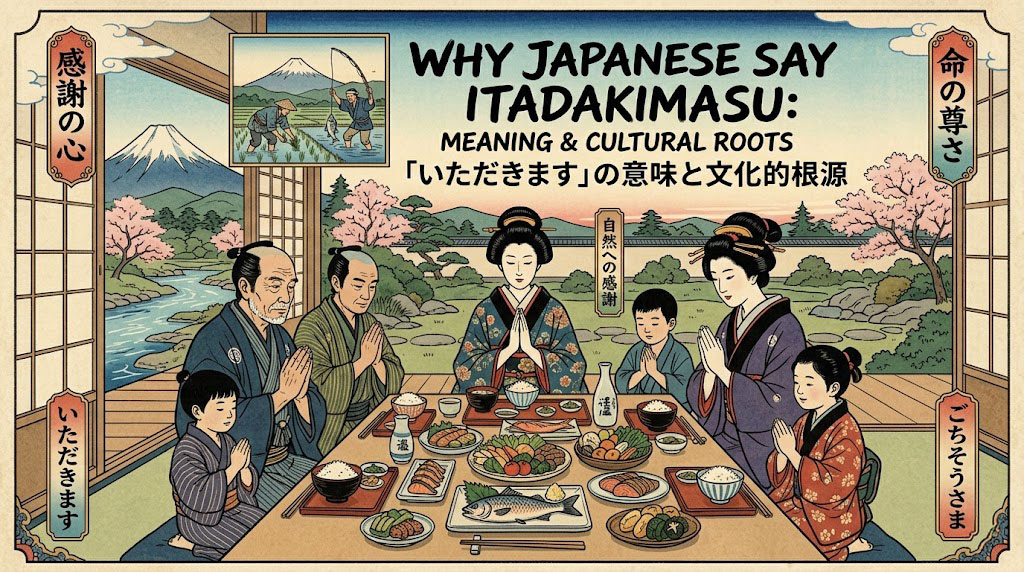
Itadakimasu meaning goes far deeper than “let’s eat” — this Japanese phrase spoken before every meal expresses profound gratitude for the food, the lives it came from, and everyone who brought it to the table.
Imagine sitting down to a delicious meal in Japan. The aroma of freshly cooked rice fills the air, vibrant dishes are arranged meticulously, and as everyone settles in, a chorus of voices softly utters, “Itadakimasu.” For many visitors, this word is a charming mystery – a polite preamble to eating, often translated simply as “let’s eat” or “bon appétit.” Yet, this single phrase holds a depth of meaning that reaches far beyond a mere table-side pleasantry. It’s a profound encapsulation of Japanese spirituality, respect for life, and a deep-seated gratitude that transforms a simple meal into a sacred act. This article will peel back the layers of this essential Japanese custom, revealing why itadakimasu is so much more than just words, and how it reflects the very heart of Japanese culture.
Quick Facts: Why Japanese Say Itadakimasu
| Detail | Information |
|---|---|
| Japanese Name | いただきます (Itadakimasu) |
| Type / Category | Traditional Japanese mealtime greeting / Expression of gratitude |
| Origin | Buddhist teachings; ancient Japanese linguistic practices (Heian period) |
| Element / Domain | Gratitude, respect, life, sustenance, spirituality |
| Known For | Pre-meal phrase expressing humility and thanks for food, lives taken, and effort involved |
| Modern Appearances | Daily life in Japan, Japanese media (anime, drama), international Japanese restaurants |
What Is Itadakimasu?
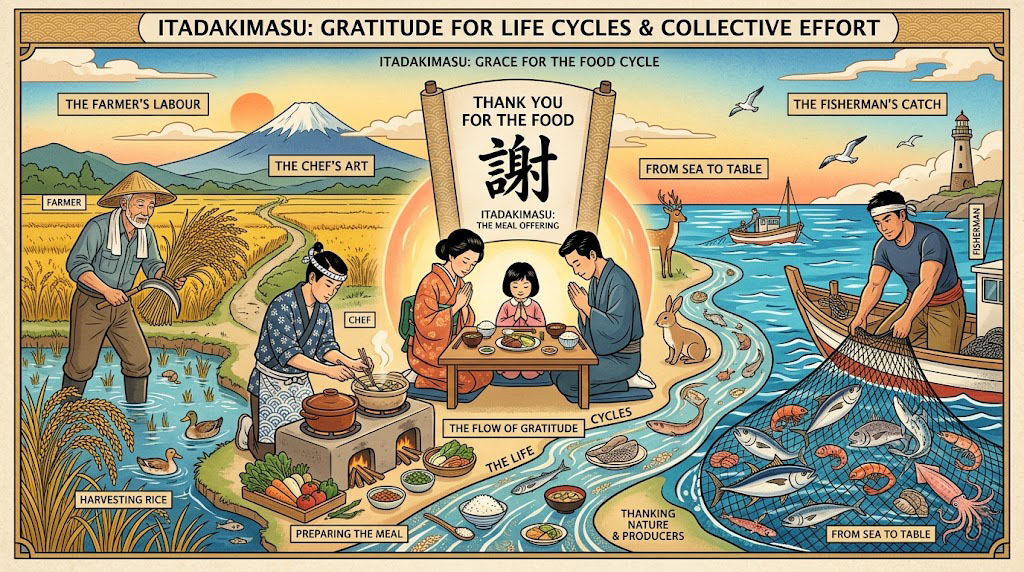
“Itadakimasu” (いただきます) is the quintessential phrase spoken in Japan before consuming a meal. While often loosely translated for convenience as “Let’s eat,” “Bon appétit,” or “Thanks for the food,” these translations barely scratch the surface of its true essence. At its core, itadakimasu is a humble expression of gratitude for all the living beings – plants and animals – that have given their lives to become sustenance, as well as for the farmers, fishermen, chefs, and all others who contributed their labor to bring the food to the table. It acknowledges the entire cycle of life and the interconnectedness that allows us to eat.
This profound sentiment is deeply ingrained in the Japanese psyche, shaping how individuals perceive food, nature, and community. It’s not merely a polite custom but a daily ritual that fosters humility, mindfulness, and an appreciation for the sacrifices made for one’s nourishment. In a society that values harmony (wa) and respect (keii), itadakimasu serves as a constant reminder of our place within the larger natural world and our responsibility to consume thoughtfully and without waste.
Origins and History
The roots of itadakimasu are multifaceted, stretching back through centuries of Japanese linguistic and spiritual development. The word itself comes from the verb “itadaku,” which originally meant “to place on one’s head.” In ancient Japan, placing an object on one’s head was a gesture of profound respect, often reserved for receiving something from a superior, like a gift from a noble, or a sacred offering from a deity. By the Heian period (794-1185), this respectful gesture evolved linguistically to mean “to humbly receive” or “to partake,” particularly when referring to food.
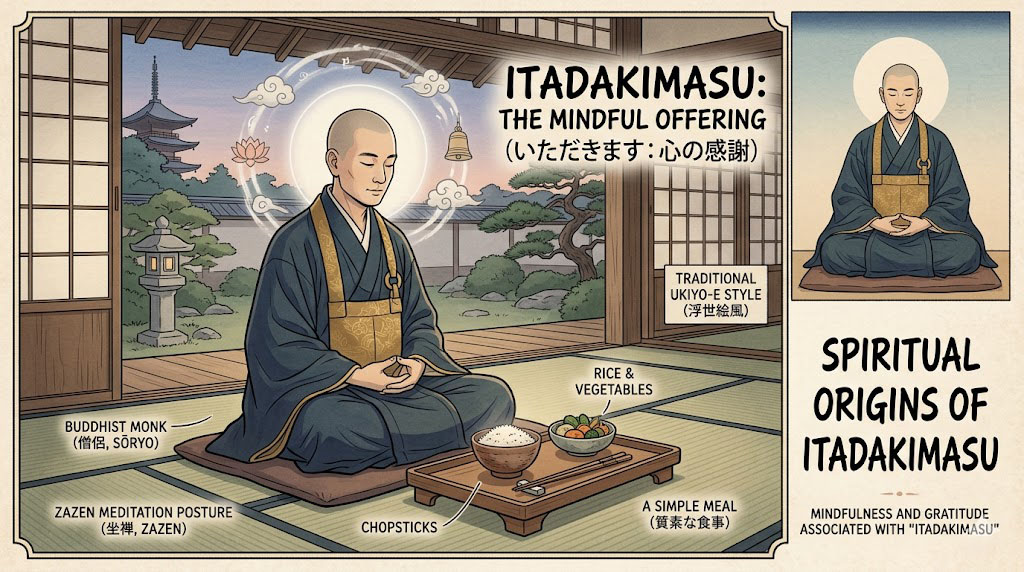
This linguistic evolution was strongly influenced by the introduction and spread of Buddhism in Japan. Buddhist teachings emphasize the interconnectedness of all life and the concept of consuming life for sustenance with gratitude and respect. Monks, in particular, would reflect on the sacrifices made for their meals, seeing food not just as nourishment but as a precious gift. This spiritual perspective merged with the existing cultural nuances of humility and respect, solidifying itadakimasu as a powerful expression of thanks for the gift of life on the plate and the efforts of those who prepared it. It became a way to acknowledge and honor every step from cultivation to consumption.
Itadakimasu: More Than Just “Let’s Eat”
Understanding itadakimasu requires looking beyond its literal translation to grasp its layers of meaning. It’s not just a signal to begin eating; it’s a moment of reflection and a collective acknowledgment of life. When uttered, it’s often accompanied by a slight bow and hands clasped together, reminiscent of a prayer. This gesture reinforces the humility and reverence inherent in the phrase. It prompts individuals to pause, to consider the journey of the food from its origin to their plate, and to truly appreciate the act of receiving sustenance. This makes the meal itself a more mindful and respectful experience, aligning perfectly with the Japanese cultural emphasis on appreciation and harmony.
The Spiritual Roots and Gratitude
The spiritual core of itadakimasu is undeniably Buddhist. The concept of kuyō (供養), or offering, is central, where food is seen as an offering from the universe, and consuming it is a respectful act of acceptance. For devout Buddhists, every meal is an opportunity to reflect on the cycle of rebirth and the sacrifices made by other beings to sustain human life. This gratitude extends not only to the animal or plant that provided the food but also to the sun, earth, and water that nurtured it.
It’s a holistic appreciation that transcends mere politeness, transforming a meal into a spiritual practice of acknowledging one’s place within the vast web of life and expressing deep thanks for its gifts.
Cultural Significance and Modern Etiquette
Beyond its spiritual dimensions, itadakimasu plays a crucial role in daily Japanese etiquette and cultural cohesion. It’s taught from a young age, often in kindergartens, where children learn to express gratitude for their meals. This early education instills a sense of respect for food, discouraging waste and promoting healthy eating habits. In social settings, saying itadakimasu together fosters a sense of unity and shared appreciation among diners, marking a clear beginning to the meal. While its spoken form has remained consistent, the emphasis on mindfulness and gratitude continues to be a cornerstone of modern Japanese dining, even in the most casual settings. It serves as a gentle reminder to savor each bite and recognize the profound privilege of eating.
Itadakimasu vs Similar Global Meal Blessings
| Feature | Itadakimasu (Japan) | Saying Grace (Christian Tradition) | Bismillah (Islamic Tradition) |
|---|---|---|---|
| Primary Focus | Gratitude for lives given (plants & animals), effort of preparers, and nature’s bounty | Thanksgiving to God for providing sustenance and spiritual blessings | Invoking Allah’s name for blessings, remembrance, and gratitude before consumption |
| Origin | Buddhist principles and ancient linguistic humility | Abrahamic religious traditions (Christianity) | Islamic religious traditions (Quran & Sunnah) |
| Gesture (common) | Slight bow, hands clasped (gassho) | Head bowed, eyes closed, hands clasped or folded | Often no specific gesture, sometimes raising hands for Dua (prayer) |
| Key Sentiment | Humility, interconnectedness of life, respect for creation | Praise, seeking blessings, acknowledging divine provision | Seeking blessings, purification, remembrance of God |
| Scope of Gratitude | Holistic: nature, living beings, human effort | Primarily divine source | Primarily divine source |
Itadakimasu in Modern Japan and Global Influence
In contemporary Japan, itadakimasu remains an indispensable part of daily life, observed by people of all ages, backgrounds, and religious affiliations. Its secular usage is now as common as its spiritual roots, universally understood as a polite and respectful acknowledgment before eating. You’ll hear it in bustling school cafeterias, quiet family homes, and even high-end restaurants. The phrase underscores a foundational aspect of Japanese culture: an enduring respect for nature, for work, and for the life that sustains us. This cultural value resonates deeply with a global audience, especially as mindfulness and sustainable living gain prominence worldwide.
The widespread appeal of Japanese cuisine and culture has also carried itadakimasu far beyond Japan’s borders. Many Japanese restaurants internationally encourage or even teach their patrons to say the phrase, fostering an authentic dining experience. Anime, manga, and Japanese dramas often feature characters saying it before meals, introducing the custom to millions worldwide. This exposure has transformed itadakimasu from a uniquely Japanese custom into a globally recognized symbol of gratitude and mindful eating, appreciated by those who seek a deeper connection to their food and the world around them.
Where to Experience This in Japan
While itadakimasu isn’t a physical location, experiencing its true essence in Japan is remarkably easy. Simply dine anywhere! Observe families in local restaurants, school children at lunchtime, or guests at a traditional ryokan (inn). You’ll witness the genuine respect and gratitude firsthand. For a deeper dive into its spiritual origins, visit a Buddhist temple such as Kyoto’s Enryaku-ji Temple on Mount Hiei, where monks practice rigorous culinary mindfulness, or join a Zen meditation retreat that often includes mindful eating (oryoki). Engaging with these traditions will give you a profound understanding of the sincere meaning behind saying itadakimasu.
Frequently Asked Questions
What is the literal translation of “itadakimasu”?
While often translated as “let’s eat” or “thanks for the food,” the literal meaning of itadakimasu comes from the verb “itadaku,” which means “to humbly receive.” In its original form, it implies receiving something from a superior, often by placing it on one’s head as a sign of respect. This conveys a deep sense of humility and gratitude for the gift of the meal, rather than a direct translation.
Why is it important to say “itadakimasu” in Japanese culture?
Saying itadakimasu is important in Japanese culture because it embodies profound gratitude and respect. It’s an acknowledgment of the lives that were sacrificed (plants, animals) to become the meal, the efforts of those who cultivated, caught, and prepared the food, and the bounty of nature itself. This ritual fosters humility, mindfulness, and a deep appreciation for sustenance, promoting harmony and discouraging waste.
Do non-religious Japanese people say “itadakimasu”?
Yes, absolutely. While itadakimasu has roots in Buddhist philosophy, it has long transcended its religious origins to become a universal cultural custom in Japan. People of all ages, beliefs, and backgrounds routinely say it before meals. It’s taught from childhood as a fundamental aspect of mealtime etiquette and an expression of general gratitude for food.
What is the correct way to say “itadakimasu” and what follows it?
The correct way to say itadakimasu is to utter the phrase clearly and sincerely before taking the first bite of your meal. It’s often accompanied by a slight bow, with hands gently clasped together (similar to a prayer gesture). After the meal, the complementary phrase “gochisōsama deshita” (ごちそうさまでした) is said, which expresses thanks for the feast and the effort put into it, completing the cycle of gratitude.