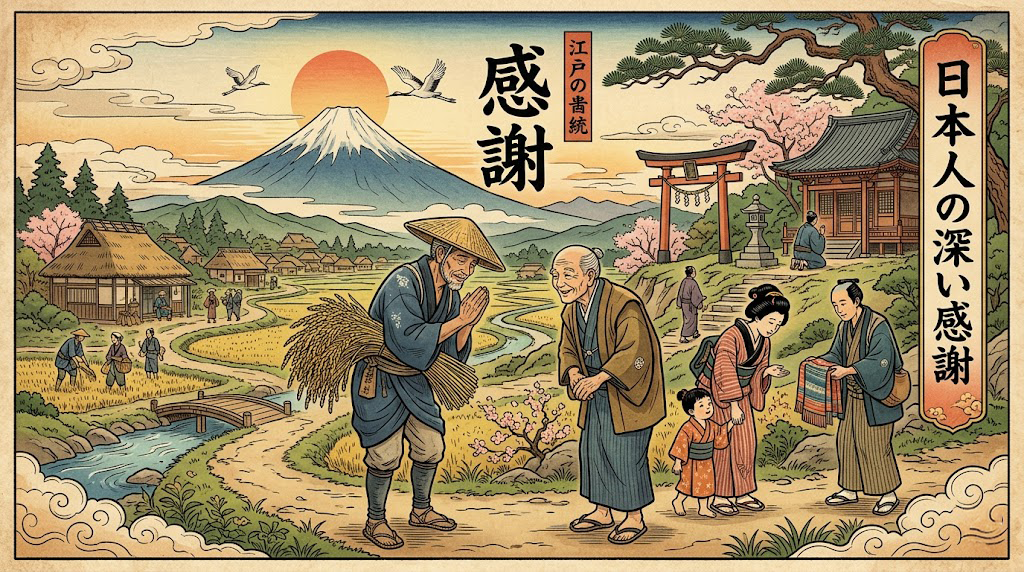
Kansha meaning in Japanese is “gratitude” — but this single word carries a depth of feeling that goes far beyond “thank you,” expressing profound awareness and appreciation for everything that sustains us.
When I was running my own business in my 20s, I noticed something almost every successful entrepreneur I met had in common: a kamidana in their office, and a habit of visiting their local shrine every month without fail. At the time I didn’t think much of it — but looking back, that quiet, consistent practice of kansha was probably part of what made them who they were.
Quick Facts: Kansha Gratitude
| Detail | Information |
|---|---|
| Japanese Name | 感謝 (kansha) |
| Type / Category | Buddhist / Spiritual / Cultural Concept |
| Origin | Ancient Japan, deeply influenced by Buddhist teachings and Shinto reverence for nature. |
| Element / Domain | Personal reflection, social harmony, interconnectedness, mindfulness, humility. |
| Known For | Deep, reflective gratitude beyond simple thanks; acknowledging the support received from others and nature; influencing daily actions and ethics. |
| Modern Appearances | Corporate philosophy, educational practices, personal development, traditional arts, social etiquette. |
What Is Kansha Gratitude?
Kansha is not merely a polite acknowledgment of a favor received, nor is it simply the emotional response to a positive outcome. Instead, it is a profound and holistic appreciation for life itself, for the intricate network of relationships and circumstances that enable our existence and experiences. It entails recognizing that everything we have, from the food we eat to the air we breathe, from the clothes we wear to the knowledge we acquire, is a gift from something or someone else. This understanding fosters a deep sense of humility and a desire to give back or contribute positively to the world.
In Japanese culture, Kansha encourages an active engagement with gratitude, rather than a passive reception. It prompts individuals to consider the effort, intention, and resources that have gone into every aspect of their lives, from the farmer who grew their rice to the artisan who crafted their tea bowl. This perspective transforms ordinary moments into opportunities for reflection and appreciation, cultivating a mindset of abundance and connection. It’s a concept that encourages individuals to be mindful of their surroundings and the invisible support systems that underpin their daily reality, leading to a more considerate and harmonious way of living.
Origins and History
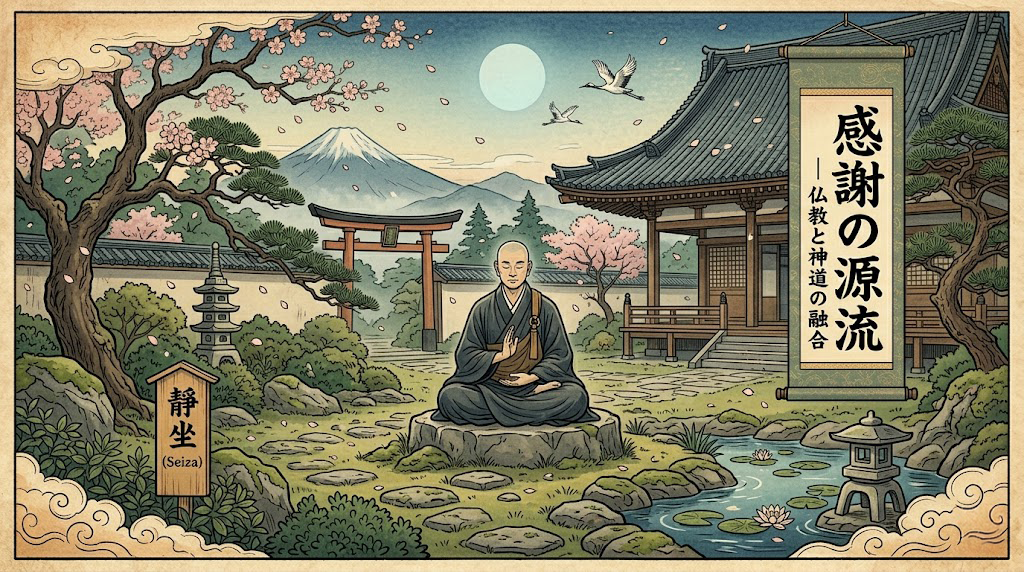
The concept of Kansha has deep roots in Japan’s spiritual landscape, primarily influenced by Buddhist philosophy, particularly Mahayana Buddhism, which emphasizes interconnectedness (engi, 縁起) and the suffering (dukkha) that arises from desire. From this perspective, even challenging experiences can be viewed as opportunities for growth and learning, fostering a form of gratitude for the lessons they impart. The Buddhist teaching of ‘on’ (恩), or obligation/indebtedness, also plays a significant role, highlighting the immense debt we owe to our parents, teachers, and society, which in turn inspires gratitude and a desire to repay that kindness.
Furthermore, Japan’s indigenous Shinto beliefs, with their reverence for nature and the kami (神, gods or spirits) inherent in all things, also contribute to the ethos of Kansha. The idea that natural phenomena, from mountains to rivers, are imbued with spiritual essence cultivates an appreciation for the bounty and beauty of the natural world. This historical interplay between Buddhism’s emphasis on interconnectedness and Shinto’s respect for nature laid the groundwork for Kansha to become a foundational pillar of Japanese cultural values, evolving over centuries to permeate social etiquette, personal ethics, and national identity.
Kansha’s Meaning and Influence
Kansha is not a rule to follow but a shift in perspective that shapes daily behavior. Practiced consistently, it fosters resilience, empathy, and social harmony: people who embrace kansha tend to notice others’ efforts more readily, forgive more easily, and treat setbacks as opportunities to learn. It also encourages “paying it forward” — extending kindness without expecting anything in return, simply because one is already grateful for what has been received. Over time, this reflective posture tends to produce a calmer, more mindful way of engaging with everyday life.
The Spiritual and Philosophical Roots of Kansha
At its core, Kansha is deeply spiritual, urging individuals to look beyond the superficial. It teaches that even negative experiences, like a job loss or an illness, can be viewed with a form of gratitude for the lessons they offer, the character they build, or the new paths they open. This doesn’t mean celebrating suffering, but rather acknowledging the full spectrum of life’s experiences as contributors to one’s personal growth. Philosophically, it aligns with the Buddhist principle of impermanence (mujo, 無常), reminding us that everything is fleeting, making each moment of connection and kindness especially precious. This spiritual grounding transforms Kansha from a mere emotion into a profound worldview, where every breath is a gift and every interaction a teaching.
Kansha in Daily Life and Social Etiquette
In daily Japanese life, Kansha manifests in numerous subtle yet significant ways. It’s evident in the meticulous packaging of a gift, reflecting gratitude for the recipient’s presence in one’s life.
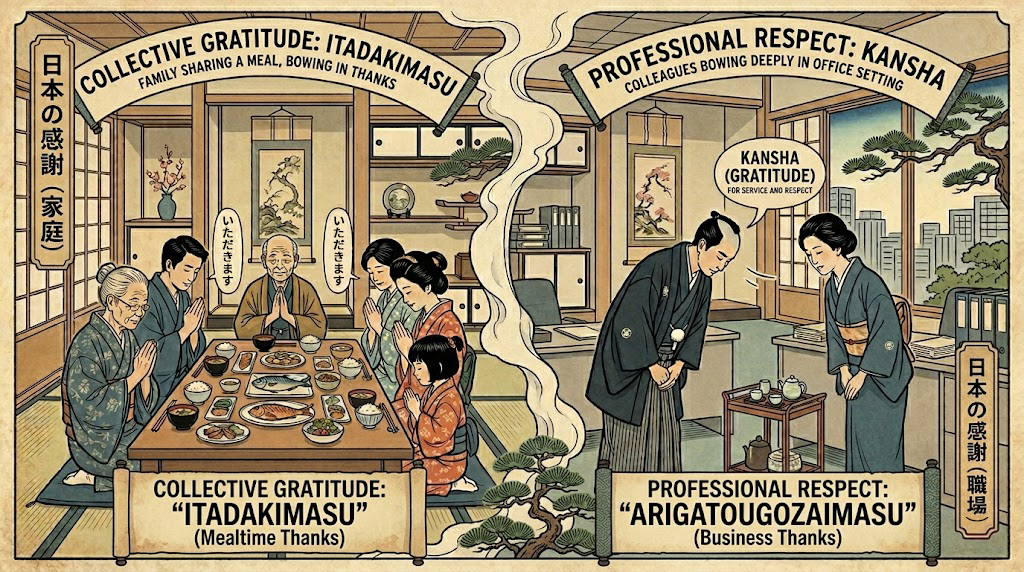
It’s in the careful preparation of food — a sentiment expressed most visibly in the mealtime ritual of itadakimasu — acknowledging the labor of those who produced it and the nourishment it provides.
In social etiquette, a deep bow accompanying a heartfelt arigato gozaimasu (ありがとうございます, thank you very much) often conveys more than just thanks; it carries an underlying Kansha, a recognition of the other person’s effort and kindness. In the workplace, employees often express Kansha for their company and colleagues, fostering a sense of loyalty and mutual respect that contributes to a harmonious working environment. This pervasive ethos of appreciation helps maintain the intricate social fabric of Japanese society, promoting collective well-being over individualistic pursuits.
Kansha Gratitude vs Similar Concepts / Traditions
| Feature | Kansha (感謝) | Arigato (ありがとう) | Okagesama (おかげさま) |
|---|---|---|---|
| Type | Profound cultural/spiritual concept | Common polite expression of thanks | Expression of gratitude/humility acknowledging indirect blessings |
| Domain | Holistic life perspective, interconnectedness, personal ethics | Direct acknowledgment of a specific favor or service | Attribution of good fortune to others’ efforts or external forces |
| Depth of Meaning | Deep, reflective, often unspoken; transformative worldview | Surface-level, transactional; direct response to an action | Acknowledging the role of others/circumstances in one’s well-being |
| When Used | Underlying philosophy in daily life; deep personal reflection | Daily interactions for specific thanks | When asked about one’s well-being or success, attributing it to others |
| Modern Pop Culture | Influences character development, themes of growth and humility | Standard dialogue, everyday politeness | Subtle acknowledgment in interactions, less direct than Arigato |
Kansha Gratitude in Modern Japan and Pop Culture
In modern Japan, Kansha continues to be a vital undercurrent, shaping personal and professional conduct. While not always explicitly stated, its principles are evident in corporate philosophies that emphasize employee welfare and customer satisfaction, often going beyond simple profit motives to foster a sense of shared purpose and gratitude for stakeholders. Educational institutions frequently teach children the importance of appreciating their food, their teachers, and their environment. In personal development, mindfulness practices and gratitude journaling, though influenced by global trends, resonate deeply with the innate Japanese inclination towards Kansha, encouraging individuals to find blessings in their daily lives.
While Kansha itself isn’t a character or a plot device, its essence is woven into the fabric of Japanese pop culture. Anime and manga often feature protagonists who grow through hardship, learning to appreciate their friends, mentors, and even their adversaries, reflecting the spiritual gratitude for challenging experiences. Themes of interconnectedness, loyalty, and paying back kindness (on-gaeshi, 恩返し) are central to many narratives, from heartwarming slice-of-life stories to epic fantasy adventures. This enduring resonance with Kansha, across generations and artistic mediums, illustrates its profound and timeless appeal, not just in Japan but for a global audience seeking deeper meaning and connection in a complex world.
Where to Experience This in Japan
While Kansha is a concept rather than a physical entity, you can experience its manifestation in Japanese culture:
- Temple Visits: Participate in a morning meditation or a tea ceremony at a Buddhist temple (e.g., Kōtoku-in in Kamakura or Eihei-ji in Fukui) to observe the mindful practices that embody deep gratitude.
- Traditional Arts: Attend a traditional tea ceremony (chadō, 茶道) or flower arrangement (ikebana, 生け花) class. The focus on precision, respect for materials, and appreciation for the moment are rooted in Kansha.
- Ryokan Stays: Experience the unparalleled hospitality (omotenashi, おもてなし) at a traditional Japanese inn. The meticulous service and attention to detail are often an expression of gratitude towards guests.
Frequently Asked Questions
What is the difference between Arigato and Kansha in Japanese culture?
While both relate to thanks, Arigato (ありがとう) is the common, direct expression for “thank you” for a specific action or favor. Kansha (感謝) is a much deeper, more holistic concept of profound, reflective gratitude for one’s entire existence, the interconnectedness of life, and even for challenges. Arigato is a spoken word; Kansha is a worldview and a state of being, though it can be expressed through actions and a mindful attitude.
How can I practice Kansha gratitude in my daily life?
To practice Kansha, cultivate a mindful awareness of everything supporting your life. Reflect on the origins of your food, clothes, and shelter, acknowledging the effort involved. Keep a gratitude journal, not just for positive events, but for lessons learned from difficulties. Show genuine appreciation through your actions, not just words, and recognize the interconnectedness of all your relationships and experiences. This active reflection deepens your sense of gratitude beyond simple thanks.
Is Kansha related to the concept of wabi-sabi or other Japanese aesthetics?
Yes, Kansha shares philosophical threads with concepts like Wabi-Sabi (侘寂) and Mono no Aware (物の哀れ). Wabi-Sabi, which appreciates beauty in imperfection and impermanence, fosters a sense of gratitude for the transient nature of life and objects. Mono no Aware, the bittersweet appreciation of life’s fleeting beauty, similarly encourages a deeper gratitude for moments as they unfold. All these concepts emphasize mindfulness and a profound appreciation for existence in its natural, impermanent state.
How does Kansha influence Japanese business practices and customer service?
Kansha profoundly influences Japanese business through the principle of Omotenashi (おもてなし), or selfless hospitality. It drives businesses to anticipate customer needs and provide service that goes beyond expectation, out of a genuine appreciation for their patronage. In internal corporate culture, Kansha fosters loyalty and teamwork, with employees appreciating their roles and colleagues. This deep-seated gratitude contributes to high-quality service, strong work ethics, and a focus on long-term relationships rather than short-term gains.