Understanding Japanese shrine etiquette is essential for any respectful visit — a set of rituals and customs that show reverence to the kami and honor centuries of sacred Shinto tradition.
Understanding Japanese shrine etiquette is essential for any respectful visit — a set of rituals and customs that show reverence to the kami and honor centuries of sacred Shinto tradition.
Imagine stepping through a towering vermillion gateway, leaving the bustling modern world behind for a realm of serene spirituality. You find yourself enveloped by the hush of ancient trees, the gentle rustle of leaves, and the subtle scent of incense. This is the profound experience of visiting a Shinto shrine in Japan. For many international visitors, the beauty is undeniable, but the rituals can seem a mysterious dance. Fear not! Understanding Japanese shrine etiquette (神社参拝作法, Jinja Sanpai Sahō) is not about strict rules, but about showing respect for the sacred space and the enshrined deities, known as Kami. This guide will demystinate these time-honored practices, empowering you to navigate Japan’s spiritual landscape with confidence and a deeply enriched appreciation. Prepare to unlock a deeper connection to Japan’s heart and soul, turning a simple visit into a truly transformative cultural immersion.
Quick Facts: Japanese Shrine Etiquette
| Detail | Information |
|---|---|
| Japanese Name | 神社参拝作法 (Jinja Sanpai Sahō) |
| Type / Category | Religious & Cultural Practice / Shinto |
| Origin | Ancient Shinto traditions, evolving over millennia |
| Element / Domain | Purity, respect, connection to Kami, spiritual harmony |
| Known For | Structured purification rituals, specific prayer methods (bows, claps), showing reverence |
| Modern Appearances | Essential knowledge for tourists, featured in travel guides, cultural documentaries, and educational programs globally |
What Is Japanese Shrine Etiquette?
Japanese shrine etiquette encompasses the traditional customs and respectful behaviors expected when visiting a Shinto shrine. At its core, Shinto (神道, Shintō), meaning “the way of the Kami,” is Japan’s indigenous spiritual practice, centered around the worship of Kami, divine spirits that reside in nature and revered ancestors. Shrines are sacred spaces dedicated to these Kami, serving as places for worship, prayer, and expressing gratitude. The etiquette is fundamentally about showing respect for the Kami and maintaining the purity (清め, kiyome) of the sacred environment, cleansing oneself of impurities (穢れ, kegare) before approaching the divine. These practices are not mere formalities; they are deeply ingrained acts of reverence, reflecting a cultural understanding of the profound connection between humanity, nature, and the spiritual world.
By observing these time-honored traditions, visitors actively participate in the spiritual ecosystem of the shrine, rather than merely observing from a distance. It’s a way of aligning oneself with the sacred energy of the space and acknowledging the presence of the Kami. This respectful engagement transforms a simple tourist stop into a meaningful cultural exchange, fostering a deeper understanding of Japan’s spiritual heritage. From the moment you approach the iconic torii gate to the final bow upon exiting, each step of the etiquette is a deliberate act, designed to prepare the mind and body for communication with the divine.
Origins and History
The roots of Japanese shrine etiquette stretch back thousands of years, intertwined with Japan’s animistic past. Early Shinto revered natural phenomena – mountains, rivers, trees, and rocks – as dwelling places for Kami. As communities grew, specific locations became designated as sacred, often marked by simple altars or ropes (注連縄, shimenawa), leading to the development of more elaborate shrine structures. The fundamental principles of purity and respectful approach emerged naturally from this reverence for nature and the divine presence within it. Ancient purification rituals, such as washing in rivers, evolved into the more formalized temizuya (water basin) practice we see today, ensuring visitors were ritually clean before presenting themselves to the Kami.
Over centuries, these practices were codified, influenced by both indigenous customs and, to a lesser extent, Buddhist ceremonial traditions, although Shinto maintained its distinct identity. The concept of the torii gate, marking the transition from the mundane to the sacred realm, became universally recognized, as did the specific sequence of bows and claps for prayer. These historical layers highlight a continuous cultural thread, preserving ancient ways of honoring the divine while adapting to societal changes. The etiquette observed today is a living legacy, a testament to Japan’s enduring spiritual connection to its land and its ancestral past, offering a timeless pathway for all who seek to engage with it respectfully.
Shrine Protocol: Appearance, Actions, and Offerings
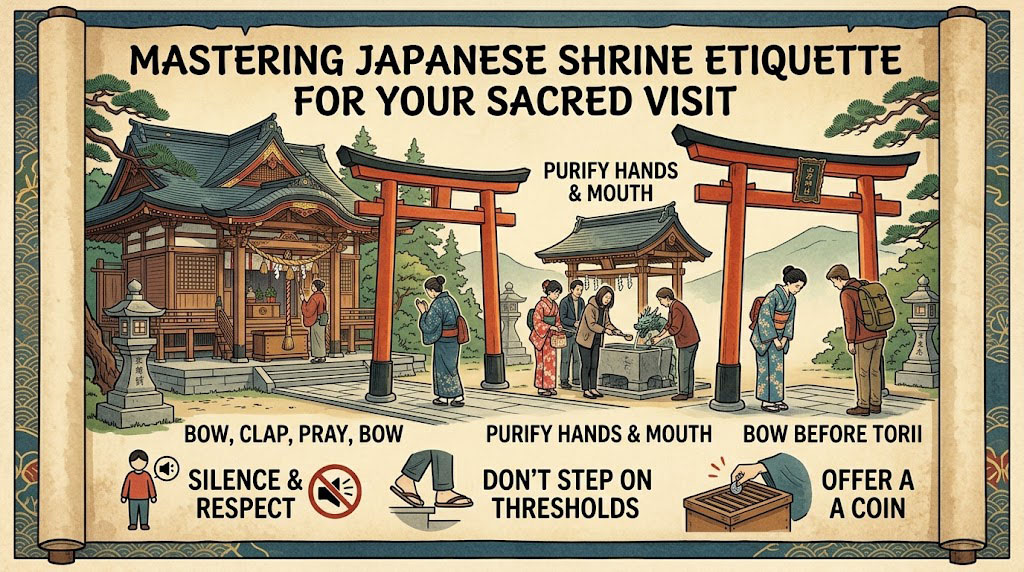
Upon arriving at a Shinto shrine, your journey into respectful engagement begins. The first step, even before the main grounds, is to pass through the torii (鳥居), the distinctive gate marking the transition from the secular world to the sacred. It’s customary to pause, bow slightly before passing through, and walk to one side of the central path (which is reserved for the Kami). Dress modestly and neatly, avoiding overly casual or revealing clothing, as a sign of respect for the sacred atmosphere. Maintain a quiet demeanor; shrines are places of contemplation, not loud conversation. Remember, every action within the shrine grounds carries a symbolic meaning, contributing to the overall spiritual experience and showing deference to the deities and the hallowed space they inhabit.
Preparing for Your Visit
Before you even arrive at the shrine, a few considerations can enhance your experience. While there’s no strict dress code, wearing neat, modest clothing is a sign of respect. Avoid overly casual attire like beachwear or revealing clothes. You’ll be doing some walking, potentially on uneven ground, so comfortable shoes are advisable. It’s also good practice to silence your phone and be mindful of your volume, maintaining a respectful quietude fitting for a sacred space. If visiting during a festival, the atmosphere will be livelier, but general decorum still applies. Carrying a small offering, typically a coin (preferably a 5-yen coin, go-en, which sounds like “good縁-en” or “good connection,” symbolizing a good connection with the kami), is customary for the main prayer. These preparations demonstrate foresight and cultural sensitivity, setting the right tone for your spiritual journey.
The Purification Rituals: Temizuya and Saisen
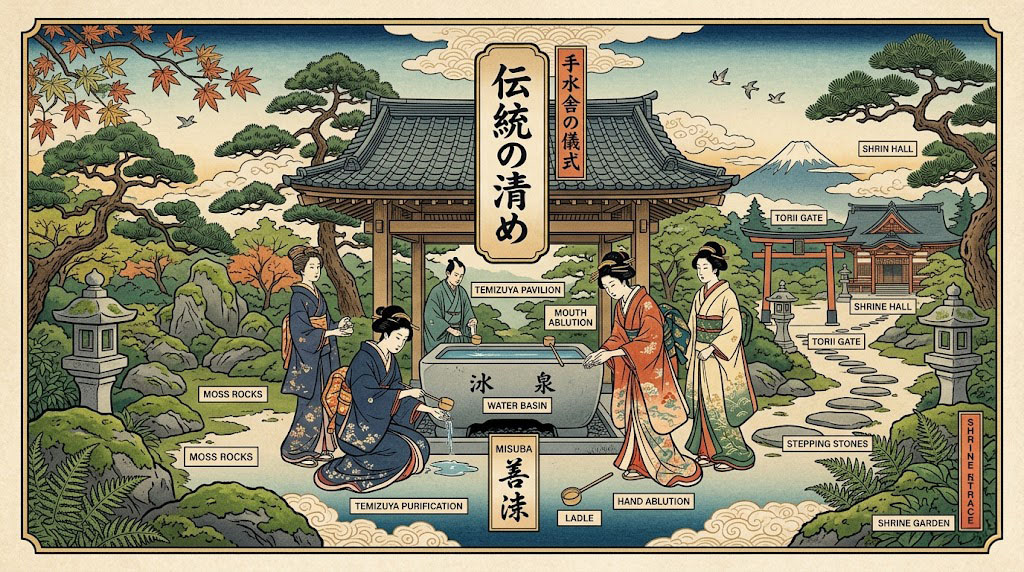
One of the most iconic and crucial aspects of Japanese shrine etiquette is the purification ritual at the temizuya (手水舎), a water basin typically found near the entrance. This ritual cleanses your hands and mouth, symbolically washing away impurities before you approach the main hall. Use the provided ladle (柄杓, hishaku) to perform the following steps: first, pour water over your left hand; then, your right hand; next, pour a small amount into your left palm to rinse your mouth (never directly drink from the ladle or spit back into the basin); finally, rinse your left hand again, and tip the ladle vertically to allow any remaining water to run down the handle, cleaning it for the next person. After purification, you can proceed to the main offering hall (拝殿, haiden). Here, locate the large wooden offering box (賽銭箱, saisenbako) and gently toss a coin (お賽銭, osaisen) – typically a 5-yen coin (五円, go-en) is favored, as its pronunciation sounds like “good縁,” meaning good fortune or good connections. This offering is a gesture of gratitude and a small contribution to the shrine’s upkeep.
Approaching the Kami: Bows, Claps, and Respectful Conduct
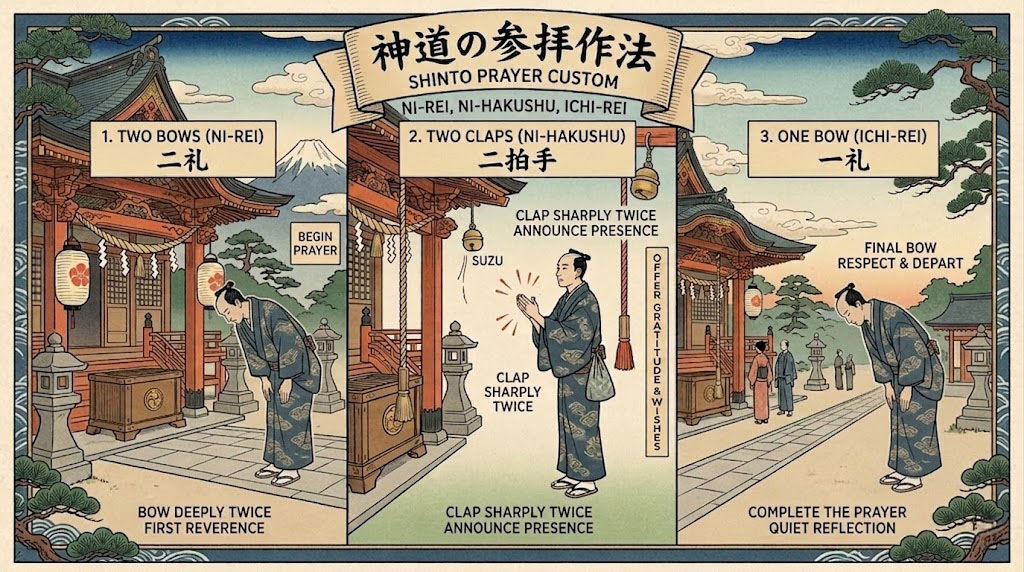
After your offering, it’s time for the formal prayer (参拝, sanpai) to the Kami. This ritual generally follows a specific sequence known as “Ni-rei, Ni-hakushu, Ichi-rei” (二礼二拍手一礼): first, two deep bows; then, two sharp claps of your hands at chest height, symbolizing a call to the Kami’s attention; next, hold your hands together in prayer, offering your silent wishes or gratitude; finally, one deep bow to conclude your prayer. If there is a bell rope, you may gently ring the bell before your offering or prayer to draw the Kami’s attention. Remember to maintain a respectful posture throughout, standing upright and facing the main hall. When exiting the shrine grounds, pause once more after passing through the torii gate and turn back towards the shrine to offer a final bow of thanks. Other elements like writing wishes on ema (絵馬, wooden plaques), drawing omikuji (おみくじ, fortune slips), or collecting goshuin (御朱印, shrine stamps) are also cherished parts of the shrine experience, each with their own simple, respectful customs.
Shinto Shrine Etiquette vs. Buddhist Temple Manners
| Feature | Shinto Shrine Etiquette | Buddhist Temple Manners | Common Respectful Practices |
|---|---|---|---|
| Type | Indigenous Japanese religion (Kami worship) | Imported religion (Buddha/Bodhisattva worship) | General reverence for sacred spaces |
| Domain | Purity, nature, ancestral spirits, national identity | Enlightenment, compassion, karma, cycles of rebirth | Quietness, modest dress, no littering |
| Main Gate | Torii (鳥居) – simple, often red, marks sacred entry | Sanmon (山門) – grand, often multi-storied, houses guardian statues | Bowing upon entry/exit |
| Purification | Temizuya (手水舎) – wash hands & mouth with ladle | Incense burning (線香, senkō) – fan smoke towards body for purification | Always clean, avoid touching sacred objects |
| Prayer Style | “Ni-rei, Ni-hakushu, Ichi-rei” (2 bows, 2 claps, 1 bow) | Gassho (合掌) – hands pressed together, sometimes silent prayer or chanting | Sincerity of heart is key |
Japanese Shrine Etiquette in Modern Japan and for Visitors
In contemporary Japan, Shinto shrines remain vital centers of community life and spiritual practice. While the pace of modern living has shifted, the reverence for Kami and the importance of traditional rituals endure. Japanese people frequently visit shrines for various occasions: New Year’s (初詣, hatsumōde), good luck charms (お守り, omamori), blessings for children (七五三, Shichi-Go-San), weddings, and simply to find a moment of peace and reflection. For many, following shrine etiquette is an intuitive act, a deeply ingrained part of their cultural identity, passed down through generations. The beauty of these traditions is their universal accessibility; Shinto is welcoming to everyone, regardless of nationality or religious background. International visitors are encouraged to participate, as long as they do so with a genuine spirit of respect and a willingness to learn. This mutual respect fosters cultural exchange and allows visitors to experience Japan not just as a tourist, but as someone engaging with its profound spiritual landscape.
The timelessness of shrine etiquette also makes it a compelling draw for global audiences through popular culture. Anime, manga, and video games often feature shrine settings or characters performing traditional rituals, piquing curiosity and inspiring real-world visits. Documentaries and travel shows showcase the serene beauty and intricate customs, making these ancient practices feel approachable. Embracing shrine etiquette is more than just following rules; it’s a way to connect with the very essence of Japan, understanding its values of harmony, purity, and respect for all living things. It offers a unique window into a culture that cherishes its past while gracefully navigating the present, allowing every visitor to become a respectful participant in this living tradition.
Where to Experience Shinto Culture in Japan
Japan is dotted with countless Shinto shrines, each offering a unique glimpse into its spiritual heart. For a grand and accessible introduction to Japanese shrine etiquette, Tokyo’s Meiji Jingu (明治神宮) is an excellent choice. Nestled within a vast, serene forest, it provides ample space to observe and practice the rituals. In Kyoto, the iconic Fushimi Inari-taisha (伏見稲荷大社), famous for its thousands of vermillion torii gates winding up a mountain, offers a different, yet equally captivating, experience. For those seeking the utmost reverence, Ise Jingu (伊勢神宮) in Mie Prefecture is Japan’s most sacred Shinto site, though certain areas have restricted access. Even small, local neighborhood shrines (鎮守の森, chinju no mori) offer an authentic and intimate experience, allowing visitors to feel the gentle pulse of daily Japanese spiritual life.
Frequently Asked Questions
Is it disrespectful to take photos at a Shinto shrine?
Generally, taking photos at Shinto shrines is permitted, especially of the grounds, buildings, and torii gates. However, it’s crucial to be respectful: avoid photographing people without their permission, refrain from using flash inside halls, and never photograph areas clearly marked as off-limits or during sacred rituals. Always prioritize reverence over photography, and if unsure, observe what others are doing or simply put your camera away.
Why is it important to follow specific etiquette at a Shinto shrine?
Following specific etiquette at a Shinto shrine is crucial as it demonstrates respect for the Kami (divine spirits) enshrined there and for the sacred space itself. These rituals, from purification to prayer, are ancient practices designed to cleanse oneself of impurities and convey sincerity to the deities. By observing them, you honor centuries of tradition and show appreciation for the spiritual beliefs that are deeply embedded in Japanese culture, enhancing your own experience and ensuring harmony within the shrine environment.
What is the significance of bowing at a torii gate before entering a shrine?
Bowing at a torii gate before entering a shrine signifies your transition from the profane, everyday world into the sacred realm of the Kami. The torii itself acts as a symbolic gateway, separating the human sphere from the divine. This simple act of bowing acknowledges the sanctity of the space you are about to enter, serving as a gesture of reverence and humility before you approach the enshrined deities.
Can non-Japanese visitors participate in shrine rituals, or should they just observe?
Non-Japanese visitors are absolutely encouraged to participate in shrine rituals, provided they do so respectfully and with a genuine interest in learning. Shinto is not an exclusive religion; its shrines welcome everyone. While observing first can be helpful, actively engaging in practices like purification at the temizuya and the two bows, two claps, one bow prayer sequence is a powerful way to connect with Japanese culture and experience the spiritual atmosphere firsthand. Sincerity of heart is always more important than perfect execution.
What should I do if I accidentally make a mistake during the shrine etiquette?
If you accidentally make a mistake during shrine etiquette, there’s no need to worry or feel embarrassed. The Kami and shrine priests understand that visitors, especially those new to Shinto practices, may not be perfectly familiar with every step. The most important thing is to approach the shrine with a sincere and respectful attitude. Simply observe those around you, learn from any unintentional missteps, and continue with your visit. Your genuine intention and reverence are what truly matter most.
What does the torii gate symbolize, and how should I pass through it?
The torii gate is the most iconic symbol of a Shinto shrine, acting as a sacred gateway that separates the profane world from the sacred realm of the kami. It signifies that you are entering a hallowed space. When passing through a torii, it is customary to stop just before it, bow once, and then proceed. It’s also traditional to avoid walking directly down the center of the path (sando), as this is believed to be the kami’s path; instead, walk along the sides.