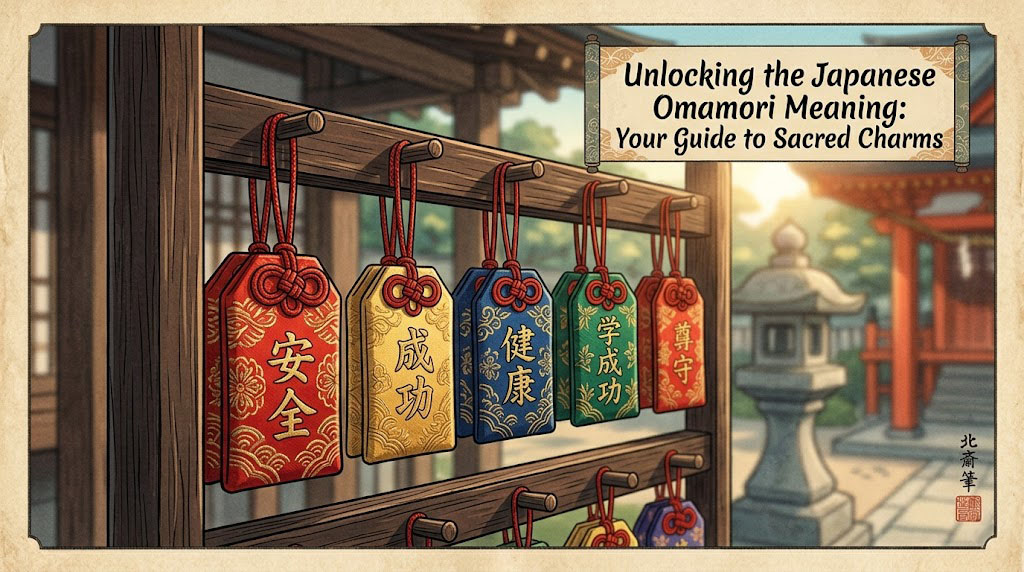
Omamori meaning in Japanese is “protection” — these small fabric amulets sold at Shinto shrines and Buddhist temples are believed to bring luck, ward off evil, and grant specific blessings to their owners.
Omamori meaning in Japanese is “protection” — these small fabric amulets sold at Shinto shrines and Buddhist temples are believed to bring luck, ward off evil, and grant specific blessings to their owners.
Step into any Shinto shrine or Buddhist temple across Japan, and you’ll immediately be drawn to a vibrant display of small, exquisitely crafted pouches, often adorned with intricate embroidery or delicate patterns. These are 御守 (omamori, omamori), the revered Japanese amulets that have captivated locals and international visitors alike for centuries. More than just souvenirs, omamori are believed to hold the blessings and protection of the deities (kami) or Buddhas (hotoke) to whom they are dedicated. They are tangible symbols of hope, belief, and connection to the spiritual realm, each designed to offer specific forms of good fortune, safety, or success. But what exactly is the profound Japanese omamori meaning, and why do these charming talismans continue to hold such a powerful place in the hearts of millions? Prepare to embark on a fascinating journey into the spiritual tapestry of Japan as we unravel the deep significance behind these sacred charms, from their ancient origins to their role in contemporary life.
Quick Facts: Omamori
| Detail | Information |
|---|---|
| Japanese Name | 御守 (omamori) |
| Type / Category | Shinto / Buddhist amulet; spiritual charm |
| Origin | Ancient Japan, rooted in animistic beliefs and spiritual protection practices |
| Element / Domain | Protection, luck, health, success, love, safety (varied by specific charm) |
| Known For | Small, cloth pouches containing sacred prayers or items, blessed by shrines/temples for specific purposes |
| Modern Appearances | Everyday item, popular souvenir, featured in anime (e.g., Jujutsu Kaisen), manga, video games, and J-dramas as symbols of luck or protection |
What Is Omamori?
At its core, an omamori (御守, omamori) is a Japanese protective amulet, typically sold at Shinto shrines and Buddhist temples. The word “omamori” itself derives from the verb mamoru (守る), meaning “to protect,” with the honorific prefix “o-” adding a sense of reverence. Each omamori is a small, beautifully crafted brocade pouch, often intricately woven with auspicious patterns and symbolic kanji characters. Inside, it contains a small wooden block, paper inscription, or cloth bearing a prayer, a deity’s name, or a sacred symbol, all imbued with the spiritual power of the shrine or temple that issued it. It is widely believed that this inner component, once blessed through sacred rites by a priest or monk, grants the omamori its protective or beneficial power.
Omamori are not merely decorative objects; they are seen as living connections to the divine. When you purchase an omamori, you are essentially receiving a concentrated form of the spiritual energy (ki) of the deity or Buddha. This energy is believed to act as a shield, warding off evil, misfortune, and illness, while simultaneously attracting good luck, health, prosperity, and success in specific endeavors. The act of carrying an omamori signifies a personal commitment to seeking divine guidance and protection, a practice deeply woven into the fabric of daily Japanese life, transcending age, gender, and social status.
Origins and History
The practice of carrying charms for protection and luck in Japan dates back centuries, long before the modern omamori took its familiar pouch form. Early Japanese spiritual practices, particularly those rooted in Shintoism, involved natural objects like stones, branches, or pieces of cloth believed to embody the power of the kami. These primitive amulets served to ward off malevolent spirits (yokai and oni) and attract blessings from benevolent deities. With the arrival of Buddhism in the 6th century, similar traditions emerged around sacred objects associated with Buddhas and bodhisattvas.
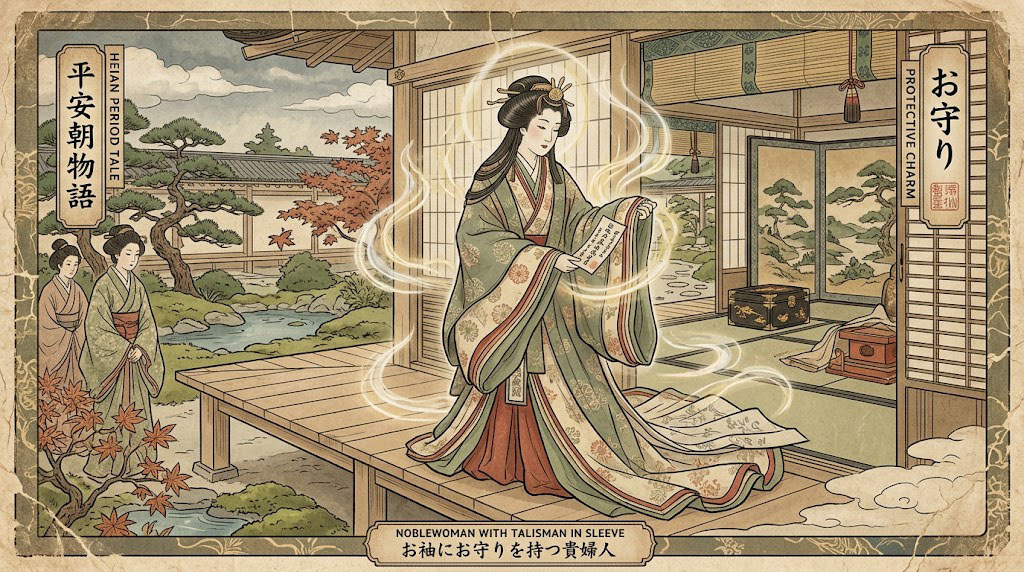
Over time, these practices evolved. During the Heian period (794-1185), written prayers and talismans became more common, often inscribed on paper or wood and carried by individuals seeking specific benefits. It was during the Edo period (1603-1868) that the protective amulet began to resemble the omamori we know today. Temples and shrines started to enclose these sacred inscriptions within small, durable cloth bags, making them easier to carry and protecting the sacred contents from exposure or damage. This standardization made omamori accessible to the general populace, leading to their widespread popularity and cementing their place as an essential element of Japanese spiritual culture.
Omamori’s Appearance, Powers, and Behavior
An omamori typically measures about 3-5 centimeters in width and 5-8 centimeters in height, though sizes can vary significantly depending on its purpose. Each one is a meticulously sewn cloth pouch, often made from vibrant silk brocade, adorned with intricate patterns like cherry blossoms, waves, geometric designs, or the emblem of the shrine/temple. Crucially, the omamori’s sacred contents are never meant to be seen or touched by the owner. Opening an omamori is widely believed to nullify its protective power, as it’s seen as a breach of trust with the deity, or allowing the sacred essence to escape. The power of an omamori isn’t about magic in a Western sense; it’s a blessing, a concentrated form of positive energy and divine intention bestowed upon the holder.
Types and Meanings
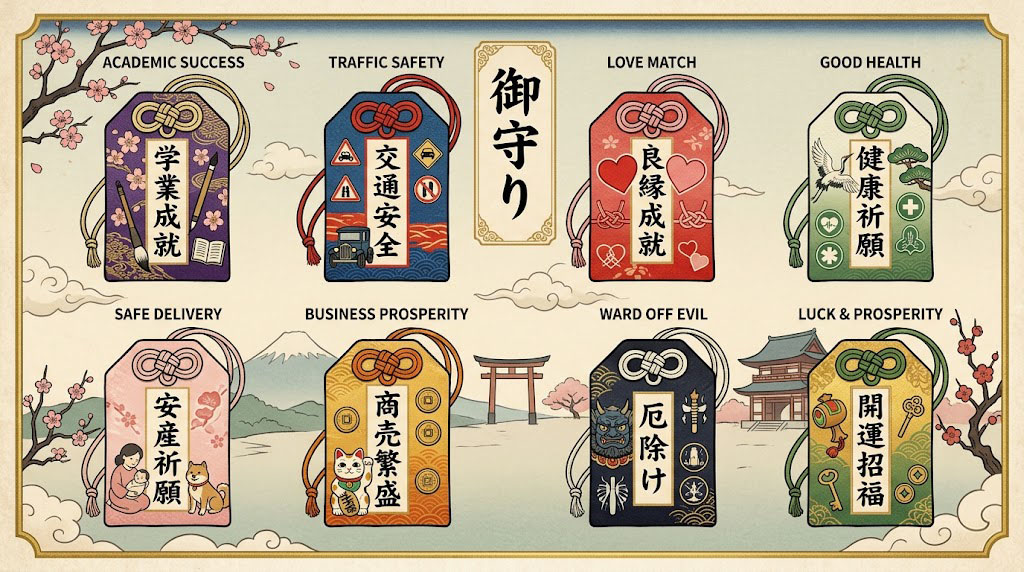
One of the most fascinating aspects of omamori is their incredible diversity, with each type designed for a specific purpose. This specificity allows individuals to seek targeted blessings for different aspects of their lives. Some of the most common types include kōtsū anzen (交通安全) for traffic safety, often hung in cars; gakugyō jōju (学業成就) for academic success, popular among students; and kenkō kigan (健康祈願) for good health. For matters of the heart, there are en-musubi (縁結び) omamori to help find love or strengthen relationships, and for expectant mothers, anzan (安産) for safe childbirth. You’ll also find omamori for general good luck (kaiun, 開運), business prosperity (shōbai hanjō, 商売繁盛), warding off evil (yakuyoke, 厄除け), and even success in specific sports.
Rituals and Care
The journey of an omamori begins at a shrine or temple, where priests or monks conduct sacred rituals to imbue the charms with spiritual energy and blessings. When you purchase an omamori, it’s not simply a transaction; it’s a participation in a spiritual exchange. Once acquired, omamori are typically carried close to the body, attached to bags, phones, keys, or hung in cars or homes, symbolizing the constant presence of divine protection. It’s important to remember not to open the pouch, as this is believed to release its power. Omamori are generally considered effective for about one year. After this period, their power is believed to wane, and they should be respectfully returned to the same shrine or temple (or any shrine/temple) where special collection points are provided. They are then ritually burned in a purification ceremony, sending the blessings back to the heavens, and making way for a new omamori to be purchased for the coming year, renewing one’s connection to the divine.
Omamori vs Similar Concepts and Traditions
| Feature | Omamori (御守) | Ema (絵馬) | Ofuda (お札) |
|---|---|---|---|
| Type | Personal protective amulet/charm | Votive tablet for wishes/thanks | Household protective talisman |
| Purpose | To carry divine protection/blessings for specific needs | To write wishes to deities, often hung at shrines | To display at home for general protection/blessings |
| Form | Small, cloth pouch containing sacred item | Wooden plaque with horse illustration | Paper, wood, or metal plaque with deity’s name/emblem |
| Usage | Carried on person, attached to items (bags, cars) | Written on, then hung at shrine/temple grounds | Placed on a high shelf, altar, or lintel at home |
| Disposal | Returned to shrine/temple annually for ritual burning | Left at shrine/temple to be collected and burned annually | Replaced annually; old ones returned to shrine/temple for ritual burning |
Omamori in Modern Japan and Pop Culture
In modern Japan, omamori remain as relevant and cherished as ever. They are not merely relics of the past but an active part of contemporary life, seamlessly blending ancient spiritual beliefs with modern sensibilities. You’ll see them hanging in taxis, adorning student backpacks, clipped to briefcases, and even tied to smartphone straps. Their enduring popularity speaks to a universal human desire for protection, good fortune, and a sense of spiritual connection in an increasingly complex world. Tourists flock to famous shrines like Meiji Jingu in Tokyo or Fushimi Inari Taisha in Kyoto to collect omamori as meaningful souvenirs, each carrying a piece of Japan’s spiritual heritage back home.
Beyond daily life, omamori frequently appear in Japanese pop culture, symbolizing luck, determination, or a character’s deep emotional ties. In anime and manga, characters often exchange omamori as tokens of friendship, love, or encouragement before important events like exams or sports competitions. Video games sometimes incorporate them as power-ups or quest items, imbuing them with mystical properties. This widespread depiction further solidifies the omamori’s status as an iconic symbol of Japanese culture, resonating with audiences worldwide and translating ancient spiritual practices into universally understood narratives of hope and perseverance.
Where to Experience This in Japan
To truly appreciate the significance of omamori, a visit to a Japanese shrine or temple is essential. Many famous sites are renowned for their unique and beautiful charms. Meiji Jingu in Tokyo offers a serene escape and a wide array of omamori, particularly for general good luck and warding off evil. In Kyoto, Fushimi Inari Taisha is famous for its vibrant red torii gates and omamori associated with business prosperity and safe travels. For academic success, Yushima Seido in Tokyo or Kitano Tenmangu in Kyoto (dedicated to the god of scholarship) are popular choices. Even smaller local shrines will offer omamori specific to their resident kami, providing a more intimate connection to regional spiritual practices.
Frequently Asked Questions
What does “omamori” literally mean in Japanese?
The word “omamori” (御守) literally means “to protect” or “protection.” It comes from the verb mamoru (守る), which means “to guard” or “to defend,” combined with the honorific prefix “o-” (御), which adds a sense of respect and reverence. Thus, an omamori is understood as a sacred object that provides divine protection and blessings.
Can you open a Japanese omamori?
No, it is generally believed that you should never open a Japanese omamori. The sacred power and blessing of the deity or Buddha are believed to reside within the sealed pouch. Opening it is thought to release or nullify its protective effects, and in some traditions, it could even be considered disrespectful to the spiritual essence contained within.
How long is an omamori effective?
Omamori are traditionally believed to be effective for one year from the time they are obtained. After this period, their spiritual power is thought to wane. It is customary to return the old omamori to the shrine or temple where it was purchased (or any shrine/temple) for a special burning ceremony, and then acquire a new one for renewed blessings for the coming year.
Can foreigners buy and use omamori?
Absolutely! Foreigners are welcome and encouraged to purchase and use omamori. They are a beautiful and accessible way to engage with Japanese spiritual culture, offering blessings for anyone, regardless of their background or beliefs. The act of choosing an omamori for a specific purpose and carrying it respectfully is a universal expression of hope and a desire for well-being.