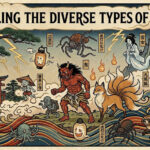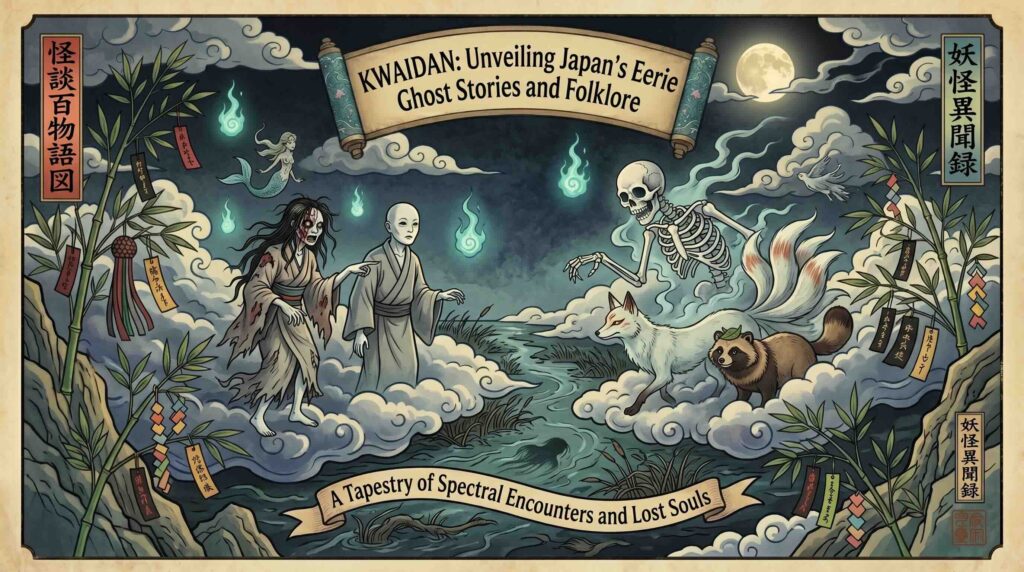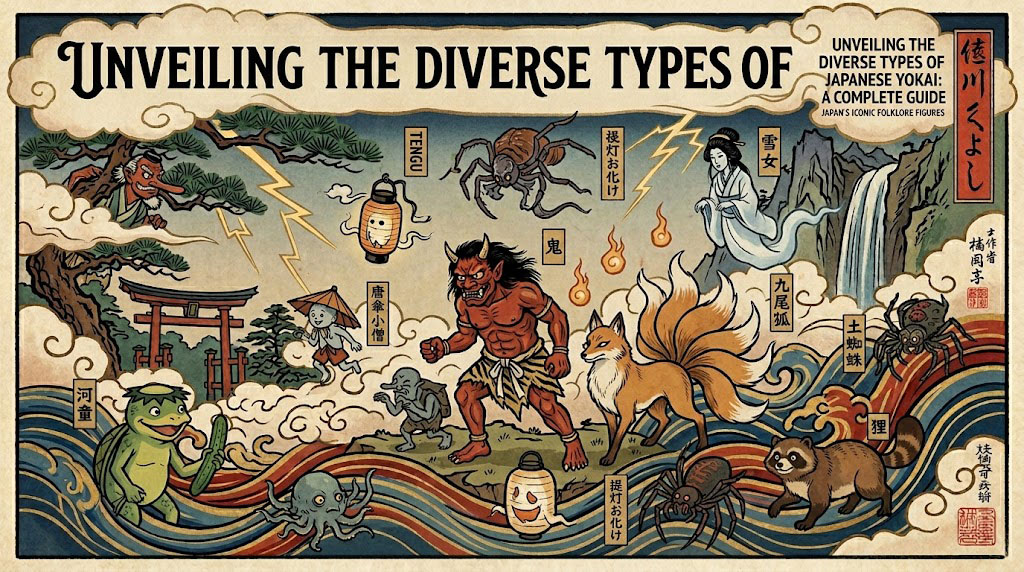
The types of Japanese yokai are as diverse as they are fascinating — from shape-shifting foxes and water imps to mountain demons and vengeful spirits, haunting Japanese folklore for centuries.
Imagine a world where every shadow held a secret, every creaking floorboard told a tale, and every rustling leaf whispered of an unseen presence. In Japan, this world is not just imagination; it’s a deep-rooted cultural fabric woven with the threads of the supernatural, specifically, the incredible realm of yokai. These aren’t just mere monsters from campfire stories; they are the personifications of ancient fears, the whimsical explanations for the inexplicable, the mischievous spirits inhabiting the everyday, and sometimes, even benevolent guardians offering protection. From the serene bamboo groves to the depths of the ocean, from bustling cities to quiet shrines, yokai have shaped Japanese folklore for millennia, influencing everything from traditional art and literature to moral lessons taught to children. They embody the rich spiritual landscape of an island nation, reflecting its people’s deep connection to nature and their enduring fascination with the mysterious. Prepare to journey into this enchanting universe as we unravel the myriad types of Japanese yokai, their fascinating origins, and their enduring legacy in modern Japan and beyond, discovering why these captivating entities continue to charm and challenge us.
Quick Facts: Japanese Yokai
| Detail | Information |
|---|---|
| Japanese Name | 妖怪 (yōkai) |
| Type / Category | Supernatural beings, spirits, monsters, apparitions, shapeshifters |
| Origin | Ancient Japanese folklore, Shinto animism, Buddhist teachings, Chinese mythology, daily life observations |
| Element / Domain | Highly diverse; includes water, mountains, forests, homes, crossroads, natural phenomena |
| Known For | Personifying natural events, explaining unknown phenomena, teaching moral lessons, causing mischief, or offering blessings |
| Modern Appearances | “GeGeGe no Kitaro,” “Yokai Watch,” “Natsume’s Book of Friends,” Studio Ghibli films (“Spirited Away,” “Princess Mononoke”), various anime, manga, and video games |
What Are Japanese Yokai?
The term yokai (妖怪, yōkai) is an umbrella term encompassing a vast and incredibly diverse pantheon of supernatural beings found throughout Japanese folklore. More than just “ghosts” or “monsters” in the Western sense, yokai are shapeshifters, spirits, demons, goblins, enigmatic apparitions, and all manner of strange phenomena that defy ordinary explanation. They can be terrifying and grotesque, possessing formidable powers; they can be deceptively beautiful, capable of luring humans with their charm; or they can be humorous, tragic, or even profoundly benevolent. This moral spectrum reflects the rich tapestry of human emotions and the inherent mysteries of the natural world. Unlike purely evil entities, many yokai simply exist, much like wildlife, neither inherently good nor bad, but capable of either mischief, harm, or even surprising kindness depending on the circumstances or human interaction.
In Japanese culture, yokai are deeply ingrained, embodying the ancient animistic beliefs of Shinto, where spirits (kami) are believed to inhabit everything from grand mountains and flowing rivers to ancient trees and even ordinary rocks. This holistic worldview fostered a natural acceptance of unseen forces and beings coexisting with humanity. For centuries, yokai were not just relegated to the realm of myth; they were considered very real presences in the daily lives of ordinary people, influencing local superstitions, religious practices, and collective fears and hopes. Their stories often provided explanations for unexplainable events, warnings against dangerous places, or lessons on proper behavior and respect for the world around us. This deep integration makes understanding yokai crucial to appreciating the nuances of Japanese spirituality and its cultural psyche.
Origins and History
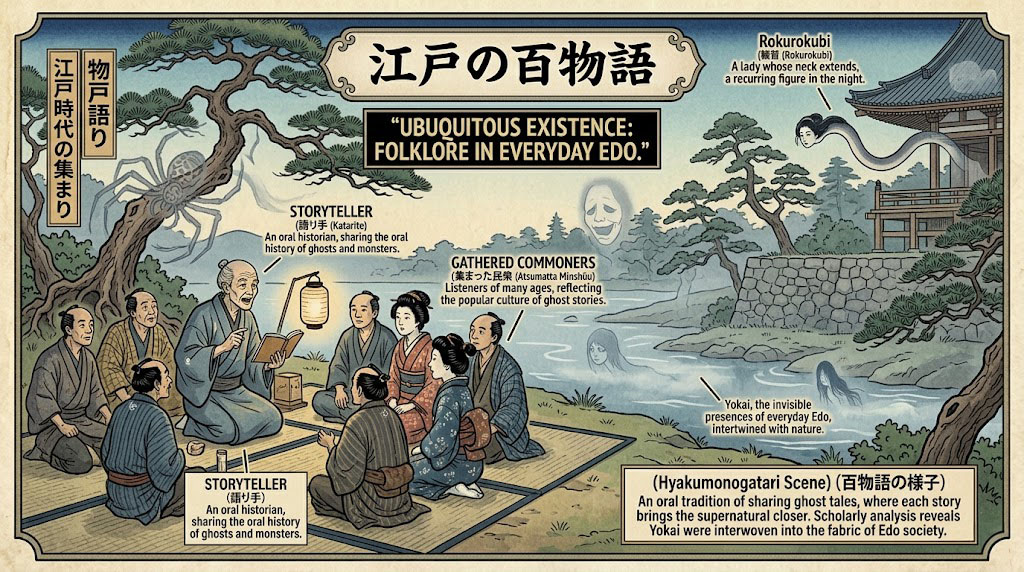
The roots of yokai stretch back into Japan’s earliest histories, intertwining with prehistoric animism and the subsequent arrival of Buddhism and Chinese folk beliefs. Early Japanese texts like the “Nihon Shoki” and “Kojiki,” compiled in the 8th century, hint at supernatural entities and strange occurrences, though the specific term “yokai” itself gained widespread prominence much later. Over centuries, these disparate tales and beliefs slowly coalesced, influenced by the changing social and religious landscape of the archipelago. It was during the relatively peaceful and culturally rich Edo period (1603-1868) that yokai truly flourished as a distinct category in popular culture, moving from fragmented oral traditions to a more organized and visual phenomenon. The invention of the printing press allowed for the widespread dissemination of illustrated encyclopedias of yokai, known as yokai zukan (妖怪図鑑), turning regional legends into nationwide sensations and firmly embedding them in the collective imagination.
Artists and scholars like Toriyama Sekien became pivotal figures during this period, meticulously illustrating and systematizing many of the yokai that we recognize today. Sekien often drew inspiration from classical literature, ancient scrolls, local legends, and even creative wordplay, inventing or popularizing countless creatures.
His most influential work, the 1776 Gazu Hyakki Yagyō (画図百鬼夜行, “The Illustrated Night Parade of a Hundred Demons”), was the first attempt to catalogue yokai systematically — one creature per page, in the style of a naturalist’s field guide. As scholar Michael Dylan Foster, Professor of Japanese at UC Davis, argues in The Book of Yōkai (2015), this format is what fixed many yokai’s now-standard appearances for good.
This era cemented yokai’s place in both art and literature. As Japan modernized, particularly after the Meiji Restoration in 1868, scientific rationalism and Western influences began to challenge traditional superstitions, pushing yokai to the fringes of mainstream belief. However, their profound cultural resilience ensured they never truly disappeared, merely adapted to new forms of storytelling and artistic expression, waiting for a resurgence in the 20th and 21st centuries.
Yokai’s Diverse Appearances, Powers, and Behaviors
Describing the “appearance, powers, and behavior” of yokai is akin to attempting to describe all animals in the world simultaneously – they are incredibly varied and defy simple categorization! Yokai manifest in countless forms: some are monstrously grotesque, with multiple eyes, elongated limbs, or terrifying visages designed to instill fear. Others are deceptively beautiful, capable of luring humans with their charm or enchanting appearances. Many are zoomorphic, resembling animals like the cunning foxes (kitsune) or the mischievous raccoon dogs (tanuki), often endowed with enhanced magical abilities and intelligence. Some are anthropomorphic, appearing mostly human but with a defining supernatural feature, such as the elongated neck of a rokurokubi or the bird-like features of a Tengu. Their powers are equally diverse, ranging from potent shapeshifting and illusion-casting to causing natural disasters, bringing misfortune, or even bestowing profound blessings. Their behavior, too, spans a vast spectrum, from terrifying maliciousness and destructive rampages to playful mischief, quiet sadness, or even a deep sense of loneliness and longing. This immense variety is part of what makes the study of yokai so captivating and endlessly fascinating.
Types and Classifications of Yokai
| Category | Japanese | Famous Examples | What They Are |
|---|---|---|---|
| Animal Yokai | 動物系 | Kitsune, Tanuki, Bakeneko | Shapeshifting beasts with magic and cunning |
| Human-like Yokai | 人間系 | Tengu, Yuki-onna, Rokurokubi | Beings that appear human but possess strange traits |
| Object Yokai | 付喪神 | Karakasa-obake, Biwa-bokuboku | Objects that gain a spirit after 100 years |
| Natural Phenomenon | 自然系 | Umi-bōzu, Yamabiko | Spirits personifying natural events and places |
| Oni (Demons) | 鬼 | Various oni | Powerful, horned ogres embodying wrath and chaos |
| Water Yokai | 水系 | Kappa, Nure-onna | Spirits of rivers, lakes, and the sea |
While an exhaustive list is impossible, yokai can be broadly categorized, offering a glimpse into their incredible diversity. One common classification is based on their origin or nature:
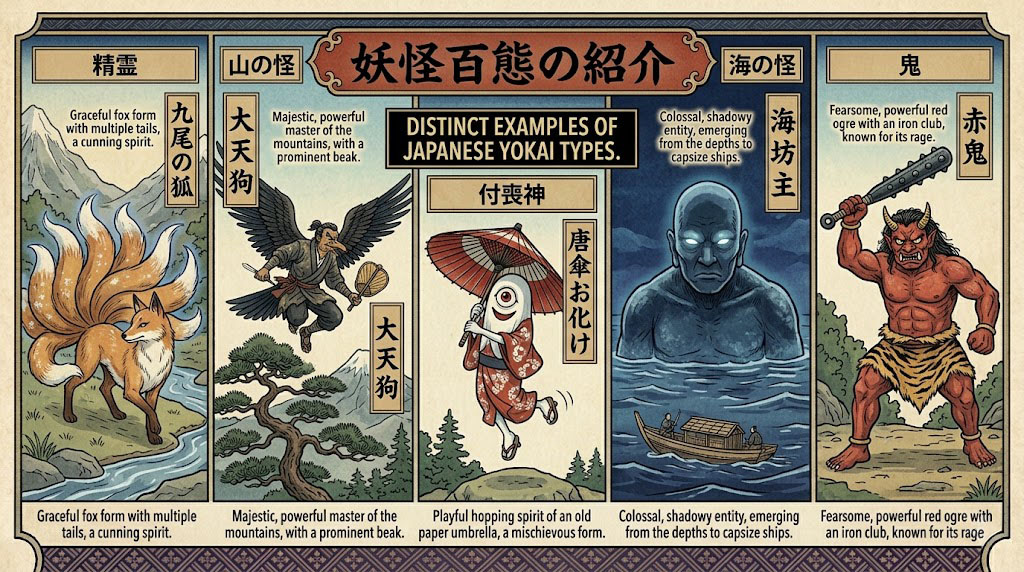
Animal Yokai (Dōbutsu-kei yōkai): Creatures like the Kitsune (foxes), Tanuki (raccoon dogs), and Bakeneko (supernatural cats) are famous for their shapeshifting abilities and trickery. They often mimic humans, possessing them or playing elaborate pranks.
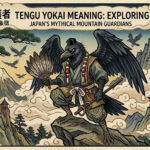
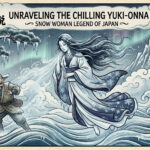
Human-like Yokai (Ningen-kei yōkai): These include beings that look mostly human but possess bizarre characteristics, such as the Yuki-onna (snow woman) or the Tengu (mountain goblin with a long nose or bird-like features), who often serve as guardians or formidable martial artists.
Object Yokai (Tsukumogami): A fascinating category where inanimate objects, after 100 years of existence, gain a spirit and come to life. Examples include the Karakasa-obake (umbrella yokai) or Biwa-bokuboku (lute yokai), often depicted as playful or slightly melancholic.
Natural Phenomenon Yokai (Shizen-kei yōkai): Yokai that personify natural occurrences or locations, like the Yamabiko (mountain echo spirit) or the Umi-bōzu (sea monk, causing shipwrecks), reflecting ancient fears and respect for nature’s power.
Oni (Demons/Ogres): Often depicted with red or blue skin, fangs, and horns, wielding iron clubs. Oni are powerful, destructive, and usually malevolent, embodying wrath and chaos.
Fearsome as they are, Oni should not be confused with the warrior demigods of the Ashura realm — Buddhist beings who likewise embody pride and rage, yet belong to the cycle of rebirth rather than to yokai folklore.
Common Themes and Human Interactions
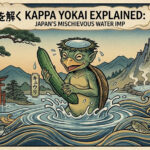
The interactions between humans and yokai are central to their legends. Many yokai stories serve as cautionary tales, warning against greed, disrespecting nature, or venturing into dangerous places. For instance, the Kappa (河童, kappa), a mischievous water imp, is known for dragging people into rivers, often symbolizing the dangers of water. Others, like the Zashiki-warashi (座敷童子, zashiki-warashi), a childlike house spirit, bring good fortune to homes they inhabit, highlighting the Japanese reverence for domestic harmony.
Yokai also often reflect societal anxieties and taboos. The legend of Nure-onna (濡女, nure-onna), a serpentine woman, might embody fears of the unknown deep waters or deceptive beauty. Over time, the perception of many yokai has shifted; some once-feared beings are now seen as quirky characters, reflecting a cultural evolution from literal belief to appreciative folklore. These creatures remind us of humanity’s continuous effort to understand and navigate the mysterious forces of the world.
Japanese Yokai vs Similar Supernatural Concepts
| Feature | Yokai (妖怪) | Yurei (幽霊) | Kami (神) | Oni (鬼) |
|---|---|---|---|---|
| Type | Broad category of supernatural beings, spirits, monsters, shapeshifters | Ghosts of the deceased, typically lingering due to unfinished business or strong emotions | Shinto deities, revered spirits, divine essence in nature or revered ancestors | Ogres, demons, powerful and often malevolent entities |
| Domain | Ubiquitous; forests, mountains, water, homes, crossroads, objects | Often tied to specific locations of death, burial sites, or places of strong emotional attachment | Shrines, natural phenomena (mountains, rivers), specific objects, ancestral homes | Hell (Jigoku), mountains, sometimes serve as guardians, or tormentors |
| Danger Level | Ranges from benign/helpful to mischievous/dangerous, rarely pure evil | Generally melancholic, terrifying, or vengeful, often causing harm unintentionally or intentionally | Generally benevolent, provide blessings and protection, but can cause disaster if angered | Highly dangerous and destructive, embodying wrath and chaos |
| How to appease | Varies; offerings, prayers, avoiding certain actions, respecting their domain | Resolving their unfinished business, proper burial rites, memorial services, exorcism | Offerings (sake, food), prayers, purification rituals, shrine visits | Often repelled by protective charms (e.g., roasted soybeans during Setsubun), strong heroes, or Buddhist rituals |
| Modern pop culture | “GeGeGe no Kitaro,” “Yokai Watch,” “Natsume’s Book of Friends” | “The Ring,” “Ju-On/The Grudge,” “Left Hand of God” | “Princess Mononoke,” “Spirited Away,” “Noragami” | “Demon Slayer,” “Dragon Ball,” “Urusei Yatsura” (as guardians/villains) |
Japanese Yokai in Modern Japan and Pop Culture
Far from being relegated to dusty ancient scrolls, yokai are thriving in modern Japan and have captivated international audiences. Their adaptability and symbolic depth make them perfect for contemporary storytelling. From the charming and often goofy characters of “Yokai Watch” which introduces them to a new generation, to the poignant and often melancholic spirits in “Natsume’s Book of Friends,” yokai continue to embody a wide range of human experiences. Master mangaka Shigeru Mizuki, creator of “GeGeGe no Kitaro,” is largely credited with revitalizing yokai in the post-war era, making them accessible and beloved figures.
Beyond anime and manga, yokai appear in video games (e.g., “Nioh,” “Okami”), traditional festivals, local mascots, and even modern art. They serve as a powerful link to Japan’s cultural heritage, a reminder of its unique spiritual landscape and its ability to find wonder and mystery in the everyday. The global appeal of yokai lies in their universal themes: the fear of the unknown, the awe of nature, the desire to understand strange occurrences, and the human inclination to personify abstract concepts. They offer a window into a world where the veil between the mundane and the magical is thin, inviting us all to look a little closer at the shadows.
Where to Experience This in Japan
For those eager to connect with yokai beyond the screen, Japan offers several fascinating destinations:
- Mizuki Shigeru Road (Sakaiminato, Tottori Prefecture): This charming street is dedicated to the famous mangaka and features over 170 bronze statues of his yokai characters, along with yokai-themed shops and museums. It’s a delightful, immersive experience.
- Tono Furusato Village (Tono, Iwate Prefecture): Known as “The Village of Folklore,” Tono is steeped in legends, particularly those of the Kappa. Visitors can explore traditional farmhouses and learn about local yokai tales, even visiting “Kappa-buchi,” a stream believed to be home to these water imps.
- Kyoto International Manga Museum (Kyoto): While not exclusively yokai-focused, this museum often hosts special exhibitions related to yokai in manga and anime, offering a modern perspective on their evolution and popularity.
These locations provide tangible links to the fantastical world of yokai, allowing travelers to walk in the footsteps of ancient legends.
Frequently Asked Questions
What is the difference between a yokai and a yurei in Japanese folklore?
While both are supernatural beings, a yokai (妖怪) is a broad category encompassing various spirits, monsters, and strange phenomena, often existing within nature or as sentient objects. A yurei (幽霊), on the other hand, specifically refers to the ghost of a deceased human. Yurei are typically bound to the earthly realm due to a traumatic death, unfulfilled desires, or strong emotional attachments, and they often appear in a specific, often terrifying, spectral form.
Are all Japanese yokai evil or dangerous to humans?
No, not all Japanese yokai are evil or dangerous. Their nature exists on a broad spectrum. Some yokai, like the Oni or certain malevolent spirits, can be very dangerous. However, many are simply mischievous (like the Kappa), others are benevolent and bring good fortune (like the Zashiki-warashi), and some are just strange and indifferent, simply existing without particular malice or kindness. Their actions often depend on how humans interact with them.
How have yokai influenced Japanese art and literature throughout history?
Yokai have profoundly influenced Japanese art and literature for centuries. During the Edo period, artists like Toriyama Sekien created illustrated encyclopedias (yokai zukan) that standardized their appearances and legends. In literature, they appeared in classic tales and supernatural fiction. Today, their influence is evident in countless anime, manga, video games, and films, serving as popular characters, plot devices, and cultural symbols that continue to captivate audiences both in Japan and globally.
Can yokai shapeshift, and which ones are best known for it?
Yes, many yokai are renowned for their shapeshifting abilities. The most famous shapeshifters are often animal yokai. The Kitsune (foxes) are perhaps the most iconic, capable of transforming into beautiful women or old men to trick or seduce humans. Similarly, Tanuki (raccoon dogs) are known for their playful transformations, often using leaves to disguise themselves. Bakeneko (supernatural cats) can also shapeshift, sometimes taking on human forms to exact revenge or cause mischief.
How Many Types of Yokai Are There?
There is no fixed number — yokai are so varied that they are grouped into broad categories rather than counted. Most classifications sort them by origin or nature: animal yokai, human-like yokai, object spirits (tsukumogami), natural-phenomenon yokai, and oni (demons). During the Edo period, illustrated encyclopedias such as those by Toriyama Sekien catalogued hundreds of individual yokai, and new ones continue to appear in folklore and modern media to this day.
What Is the Most Famous Japanese Yokai?
A handful of yokai stand out as the most widely recognized: the Oni (horned ogre), the Kappa (river imp), the Tengu (mountain guardian), and the shapeshifting Kitsune (fox) and Tanuki (raccoon dog). These appear constantly in folklore, festivals, and modern anime and games, making them the public face of Japan’s vast yokai world.