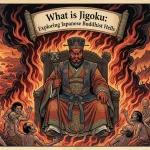
Jigoku meaning in Japanese Buddhism refers to the hell realms — a terrifying series of planes where souls face punishment proportional to the negative karma they accumulated in life.
Imagine a realm where the consequences of every action, every thought, are meticulously weighed, and punishment is meted out with a chilling precision tailored to each sin. This is not a distant, abstract concept but a vivid, inescapable reality in Japan’s traditional understanding of the afterlife: Jigoku (地獄, jigoku), the Buddhist hells. Far from a mere cautionary tale, Jigoku has profoundly shaped Japanese art, literature, and moral philosophy for centuries. Its terrifying imagery, complex hierarchy of judges, and varied torments reflect a deep engagement with karma and retribution that continues to resonate today. Prepare to embark on a journey through the fiery pits and icy depths, as we unravel the intricate beliefs surrounding Jigoku and its enduring place in Japanese spiritual consciousness.
Quick Facts: Jigoku (Japanese Hell)
| Detail | Information |
|---|---|
| Japanese Name | 地獄 (jigoku) |
| Type / Category | Buddhist Concept, Realm of Suffering |
| Origin | Ancient Indian Buddhism, spread to Japan via China |
| Element / Domain | Death, Punishment, Karma, Sin |
| Known For | Elaborate tortures tailored to specific sins, overseen by formidable judges like Enma-ō, offering a path to purification and eventual rebirth. |
| Modern Appearances | Anime (Hozuki’s Coolheadedness, Dragon Ball), manga, video games (Sekiro: Shadows Die Twice, Onimusha), traditional art. |
What Is Jigoku?
Jigoku (地獄) — literally meaning “earth-prison” — refers to the realms of hell in Japanese Buddhist cosmology. Far from a single place, it is a whole system of hells where souls endure suffering to purify their negative karma before being reborn into one of the Six Realms (Rokudō).
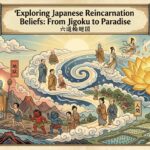
It is one of the six realms of existence, known as the Rokudō (六道, six paths), which also include the realms of gods, humans, titans, hungry ghosts, and animals. For those who accumulate negative karma during their lives, rebirth into one of the Jigoku realms is a terrifying prospect, a place of intense suffering and purification. These hells are not eternal damnation in the Western sense, but rather a temporary (though immensely long) period of atonement and karmic cleansing, after which a soul can eventually be reborn into a higher realm.
The concept of Jigoku serves as a powerful moral compass, vividly illustrating the consequences of sinful actions. Its detailed depictions, from ancient scrolls to modern media, emphasize the importance of living a virtuous life aligned with Buddhist precepts. Japanese culture has embraced these narratives, integrating them into folk tales, proverbs, and even daily expressions, making the idea of Jigoku a pervasive and understood cultural reference.
Origins and History
The concept of Jigoku arrived in Japan with Buddhism from India, via China and Korea, primarily during the 6th to 8th centuries. Early Buddhist texts, such as the Sutra of the Ten Kings, vividly described the various hells and the process of judgment. These ideas resonated deeply within Japanese society, particularly during the Heian period (794-1185), when a greater emphasis was placed on personal salvation and the fear of karmic retribution.
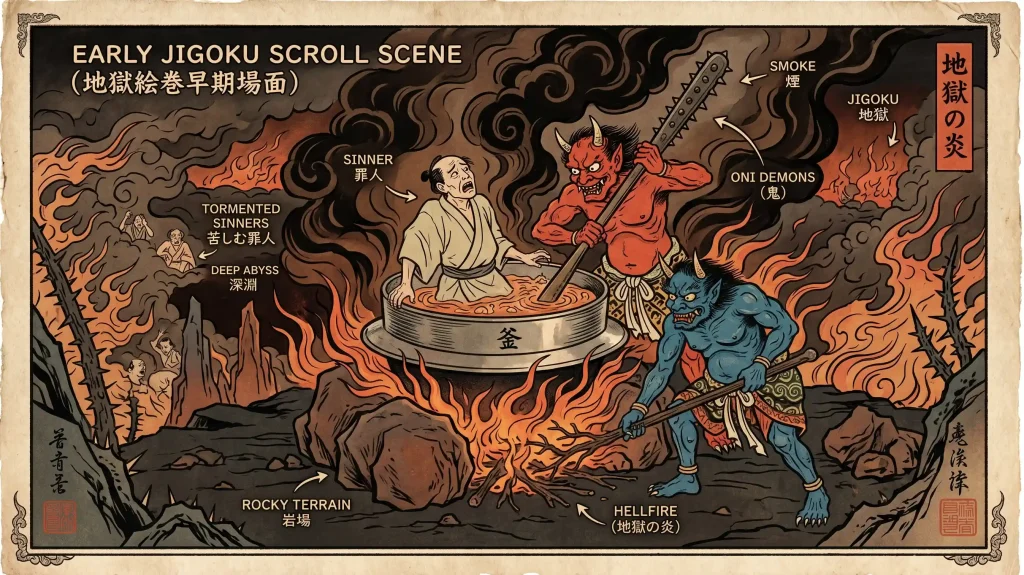
One of the most significant influences came from the esoteric Buddhism introduced by figures like Kūkai. Tales of the afterlife were often used by monks to inspire moral behavior and devotion among the populace. The Heian and Kamakura periods saw the creation of exquisite Jigoku-e (地獄絵, hell paintings) and illustrated scrolls like the Jigoku Zōshi (地獄草紙, Handscrolls of Hells), which graphically depicted the horrific punishments awaiting sinners. These artistic masterpieces served not only as religious texts but also as powerful visual sermons, solidifying the imagery of Jigoku in the collective Japanese imagination.
In the 10th century, the monk Genshin’s influential text, the Ōjōyōshū (往生要集, “Essentials for Rebirth in the Pure Land”), gave Jigoku its most vivid and detailed description, frightening people toward pious living and rebirth in Amida Buddha’s Pure Land — and shaping Japanese hell imagery for centuries.
Jigoku’s Appearance, Powers, and Behavior
Jigoku is not a single, monolithic realm but a complex cosmology of distinct hells, each designed to punish specific transgressions. These realms are typically depicted as horrifying landscapes filled with grotesque demons known as Oni (鬼, oni), rivers of blood, mountains of needles, and lakes of fire. The sounds are of perpetual wailing and torment, the air thick with the stench of decay and burning flesh. The powers at play are karmic law itself, enforced by powerful judges and their demonic executioners, ensuring that every sin, from petty theft to murder, receives its just and agonizing due.
The Rulers of Jigoku: Enma-ō and the Ten Kings
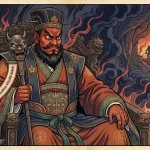
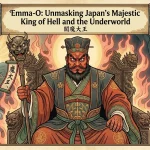
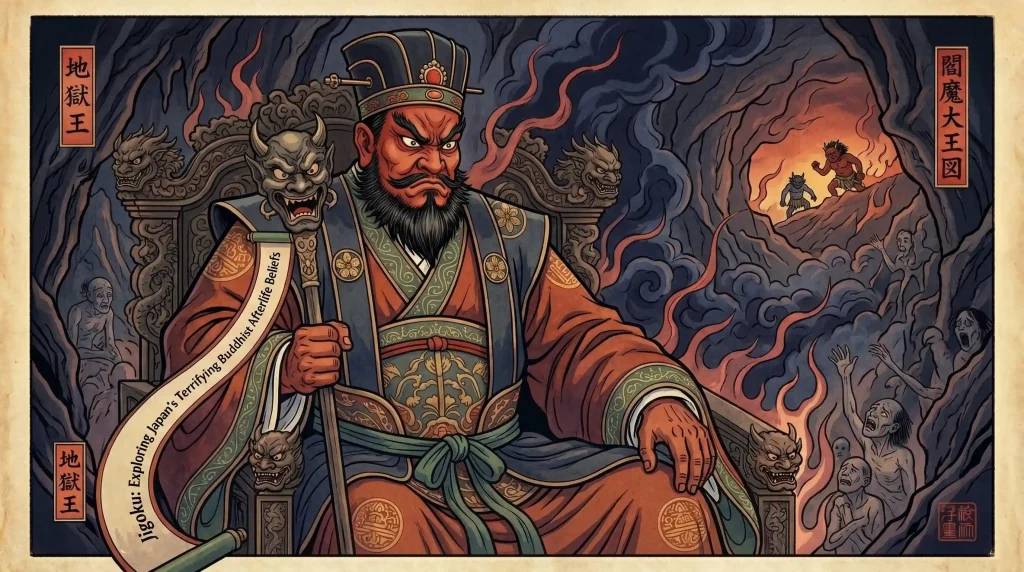
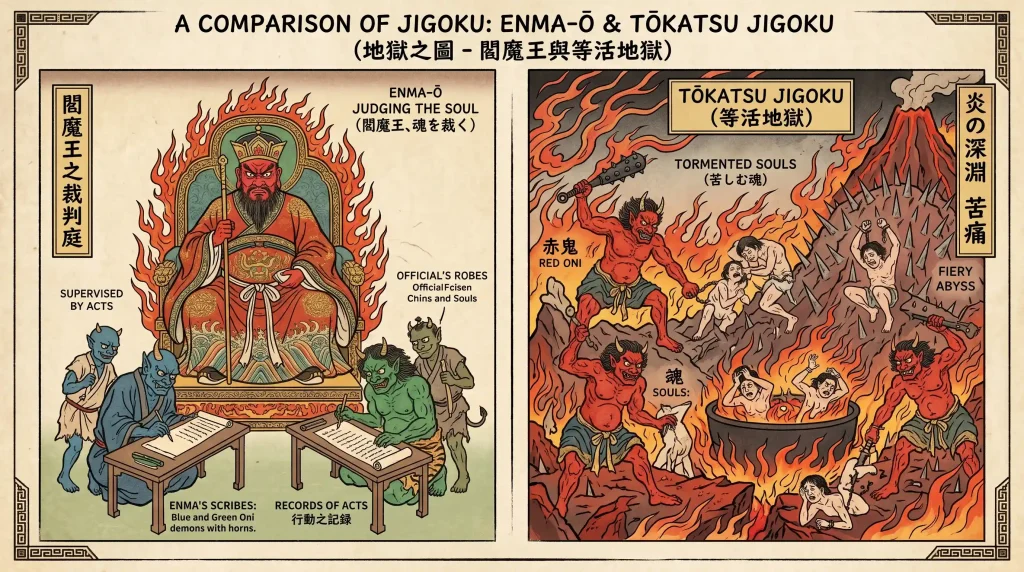
At the heart of Jigoku’s judicial system stands Enma-ō (閻魔王, Enma-ō), the King of Hell, an imposing figure of immense power and stern justice. He is often depicted with a wrathful red face, bulging eyes, a long beard, and wearing traditional Chinese robes, holding a scepter or a scroll. Enma-ō presides over the court of the dead, making the final judgment on a soul’s destination based on their karmic record, meticulously kept by his scribes. He is assisted by the Jū-ō (十王, Ten Kings of Hell), who each oversee specific stages of judgment during the 49 days after death, and various lower-ranking deities and Oni.
During these 49 days, the deceased’s family performs rituals to assist the soul, hoping to mitigate their karmic debt and secure a more favorable rebirth. The Ten Kings examine the soul’s actions, with Enma-ō delivering the ultimate verdict, determining which of the numerous Jigoku a soul will inhabit, or if they are worthy of rebirth into a higher realm.
The Eight Hot Hells and Eight Cold Hells
The most commonly described Jigoku realms are the Hachi Daikan Jigoku (八大地獄, Eight Great Hot Hells) and the Hachi Daikanhō Jigoku (八大寒氷地獄, Eight Great Cold Hells). The hot hells punish sins of hatred, anger, and violence, with torments ranging from being flayed alive, boiled in molten iron, or endlessly dismembered. For instance, the Tōkatsu Jigoku (等活地獄, Hell of Repeated Revival) sees sinners repeatedly killed and revived to suffer again, while the Kyōkan Jigoku (叫喚地獄, Hell of Wailing) is filled with the shrieks of those being burned and tortured. The cold hells, on the other hand, punish sins of cruelty and insensitivity, subjecting souls to unbearable freezing temperatures, causing their bodies to crack and shatter. These elaborate descriptions served not only as theological concepts but as profound psychological tools to encourage righteous living.
The Path to Rebirth and Karma
Entry into Jigoku is determined solely by one’s karma (業, gō). Every thought, word, and deed, whether good or bad, creates karmic imprints that dictate future existences. Souls laden with negative karma are pulled towards Jigoku. However, the suffering in Jigoku is not eternal; it serves a purpose: to purify the soul. Once the karmic debt is paid, a soul’s consciousness is released from that specific hell and can then move on to another realm of samsara, often a higher one, depending on any residual positive karma. This cycle of purification and rebirth underscores a core Buddhist teaching: liberation is possible for all beings, even those in the deepest hells, through the eventual exhaustion of negative karma and the cultivation of positive actions.
Jigoku vs Similar Afterlife Concepts
| Feature | Jigoku (Buddhist Hell) | Yomi-no-Kuni (Shinto Underworld) | Rokudō (Six Paths of Rebirth) |
|---|---|---|---|
| Type | Realm of karmic punishment and purification | Land of the dead, realm of impurity | Cycle of rebirth into different realms |
| Domain | Buddhist cosmology, consequence of negative karma | Shinto mythology, ancestral spirits | Buddhist cosmology, karmic cycle |
| Purpose | Atonement for sins, eventual spiritual advancement | Final resting place for all souls, regardless of deeds | Ultimate goal is to escape this cycle (nirvana) |
| Punishment | Specific, elaborate tortures for specific sins, temporary | No direct punishment, but a gloomy, defiling existence | Not punishment, but rebirth into a lower realm is undesirable |
| Salvation/Release | Possible after karmic debt is paid, leads to rebirth | No escape; souls become permanent ancestral spirits (kami) or remain defiled | Escape through enlightenment (nirvana) |
| Key Figures | Enma-ō, Jū-ō (Ten Kings), Oni demons | Izanami (goddess of death), no specific judges | Buddha, Bodhisattvas, various deities and beings within each realm |
Jigoku in Modern Japan and Pop Culture
Despite Japan’s modernization, the vivid imagery and moral lessons of Jigoku continue to exert a powerful influence, particularly in popular culture. Anime and manga are rife with references to Jigoku and its inhabitants. Perhaps the most direct and humorous portrayal is in Hozuki’s Coolheadedness, a popular manga and anime series that comically depicts the daily bureaucratic life of Jigoku, with Hozuki serving as Enma-ō’s chief aide. Other works like Dragon Ball Z, Inuyasha, and video games such as FromSoftware’s Sekiro: Shadows Die Twice feature characters and settings directly inspired by Jigoku and its Oni, adapting these ancient beliefs for new generations.
Beyond entertainment, the concept of Jigoku still subtly underpins Japanese notions of morality and consequence. Phrases like “Jigoku de ochiiru” (to fall into hell) are common warnings. The enduring resonance of Jigoku globally speaks to the universal human concern with justice, retribution, and the ultimate fate of the soul. These ancient narratives, far from being forgotten, prove remarkably adaptable, continuing to explore profound philosophical questions through captivating, if often terrifying, imagery.
Where to Experience This in Japan
To truly connect with the history and imagery of Jigoku, visitors to Japan have several compelling options. Many Buddhist temples house stunning Jigoku-e paintings or statues of Enma-ō. Tōdai-ji Temple in Nara, for instance, has a large, intimidating statue of Enma-ō in its Kōkaidō hall. Another unmissable stop is Enno-ji Temple (円応寺) in Kamakura, which houses a powerful set of statues depicting Enma-ō and all Ten Kings of Hell (Jū-ō), offering a rare chance to encounter the full court of underworld judges in one place. For a more immersive experience, the town of Beppu in Oita Prefecture is famous for its geothermal hot springs, known as “Jigoku Meguri” (hell tour), where visitors can see bubbling, colorful springs named after the various hells (e.g., Blood Pond Hell, Sea Hell). Additionally, the Tokyo National Museum and the Nara National Museum occasionally feature exhibitions of historical Jigoku-e scrolls, offering a rare glimpse into these ancient artistic and spiritual traditions.
Frequently Asked Questions
Is Jigoku the only concept of the afterlife in Japanese beliefs?
No, Jigoku is primarily a Buddhist concept within Japan. Alongside it, traditional Shinto beliefs include Yomi-no-Kuni (黄泉の国), a gloomy underworld where all souls go, regardless of their deeds, becoming part of the ancestral spirits. There’s also the broader Buddhist concept of reincarnation through the Rokudō (Six Paths of Rebirth), where souls cycle through different realms until they achieve enlightenment.
Who judges souls in Jigoku, and how does the process work?
The primary judge in Jigoku is Enma-ō, the King of Hell, often depicted as a fearsome, red-faced figure. He presides over the court of the dead and, along with the Jū-ō (Ten Kings of Hell), reviews a soul’s karmic record during the 49 days after death. Based on their actions in life, Enma-ō determines which of the many hells a soul will be sent to for purification, or if they are worthy of rebirth into a higher realm.
Can one escape Jigoku, or is the punishment eternal?
Unlike some Western concepts of eternal damnation, punishment in Jigoku is not eternal. It is a temporary, albeit extremely long, period of atonement and purification for negative karma. Once a soul has paid its karmic debt through suffering, it is released from Jigoku and can be reborn into a higher realm, eventually working towards enlightenment and escaping the cycle of rebirth (samsara) entirely.
How does Jigoku differ from the concept of Christian Hell?
Jigoku differs significantly from Christian Hell in several key aspects. Christian Hell is typically a place of eternal damnation and separation from God, often seen as a final judgment. Jigoku, conversely, is a temporary realm of purification, part of a larger cycle of rebirth (samsara) driven by karma. Its purpose is ultimately rehabilitative, not solely punitive, and there is an eventual path to release and spiritual advancement, which is generally not present in the traditional Christian view of hell.
How Does Jigoku Differ from the Shinto Underworld, Yomi?
Jigoku is a Buddhist realm of active karmic punishment and purification, governed by judges like Enma-ō, with specific torments for specific sins. Yomi (黄泉), the traditional Shinto underworld, is different: a gloomy, defiling land where all the dead go regardless of their deeds, with no moral judgment or punishment. In short, Jigoku purifies through suffering, while Yomi is simply a shadowy resting place.
What Does Jigoku Mean?
Jigoku (地獄) literally means “earth-prison” and is the Japanese word for the Buddhist hell realms. Rather than one location, it describes an elaborate system of hells where souls are punished and purified according to the karma they built up in life, before eventually being reborn elsewhere in the cycle of existence.