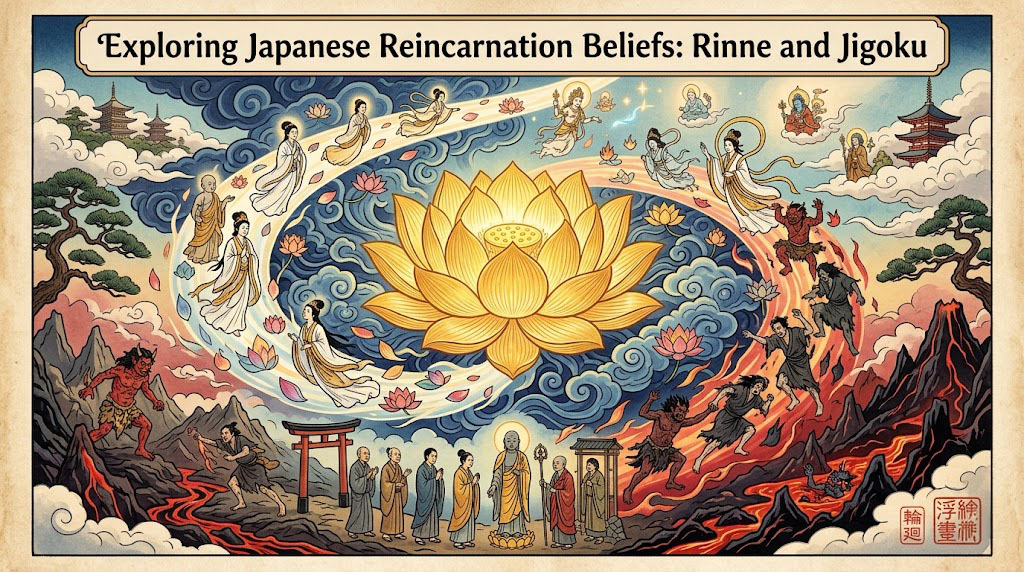
Imagine a world where every action, every thought, every whispered word echoes across lifetimes, meticulously charting your course through an endless cycle of rebirth. This isn’t just a philosophical musing; it’s the profound bedrock of Japanese reincarnation beliefs, deeply woven into the spiritual fabric of the nation. From the serene ascent to divine realms to the terrifying descent into the fiery pits of Jigoku (地獄), the Buddhist concept of Rinne (輪廻), or the cycle of rebirth, offers a compelling framework for understanding existence itself. It’s a vision of cosmic justice, personal responsibility, and the ultimate pursuit of enlightenment that has captivated, inspired, and terrified generations. Prepare to embark on a journey through the intricate spiritual cosmology of Japan, where the consequences of the present life ripple through countless future ones, and discover how these ancient beliefs continue to shape culture, art, and the very concept of destiny.
Quick Facts: Japanese Reincarnation Beliefs
| Detail | Information |
|---|---|
| Japanese Name | 輪廻 (Rinne), 輪廻転生 (Rinne Tenshō), 地獄 (Jigoku) |
| Type / Category | Buddhist Concept / Afterlife Beliefs |
| Origin | India (Buddhism), introduced to Japan via China and Korea |
| Element / Domain | Karma, spiritual realms, ethical conduct, enlightenment |
| Known For | The six realms of existence (Rokudō) and the endless cycle of rebirth driven by karma, with Jigoku as the lowest realm. |
| Modern Appearances | Anime (e.g., “Hozuki’s Coolheadedness,” “Dragon Ball Z”), manga, video games (e.g., “Shin Megami Tensei”), traditional art and temple practices. |
What Is Japanese Reincarnation?
At the heart of Japanese reincarnation beliefs lies the profound Buddhist concept of Rinne (輪廻), often translated as the “wheel of life” or the “cycle of rebirth.” This isn’t merely a quaint folk tale; it’s a fundamental theological principle dictating that all sentient beings are trapped in an endless cycle of death and rebirth, moving through various realms of existence based on their accumulated karma. Unlike a simple concept of a singular afterlife, Rinne describes a complex, dynamic system where one’s actions, both good and bad, determine the nature of their next life, potentially across myriad forms and environments.
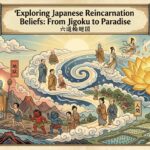
In Japan, these beliefs are inextricably linked with the understanding of self, morality, and the pursuit of enlightenment. The ultimate goal within this framework is to break free from Rinne, achieving nirvana (涅槃, Nehan) or buddhahood (仏陀, Butsuda). However, for most, the journey through the Rokudō (六道), or the Six Realms of Reincarnation, is an inescapable reality. Each realm—heavenly beings, titans, humans, animals, hungry ghosts, and hell-dwellers—represents a different karmic state, offering both opportunities and hardships, all leading back to another birth until true liberation is attained.
Origins and History
The concept of reincarnation (Rinne) entered Japan with the introduction of Buddhism from China and Korea around the 6th century CE. While indigenous Shinto beliefs held their own views on the afterlife, primarily focusing on Yomi (黄泉), a shadowy underworld, Buddhism brought a far more intricate and ethically driven cosmological system. Early Japanese society, particularly the aristocracy, eagerly adopted Buddhist tenets, finding its explanations for suffering, moral retribution, and the promise of salvation deeply compelling. Texts depicting the various Hells (Jigoku) and heavenly realms became popular, solidifying these ideas in the collective consciousness.
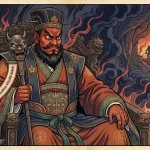
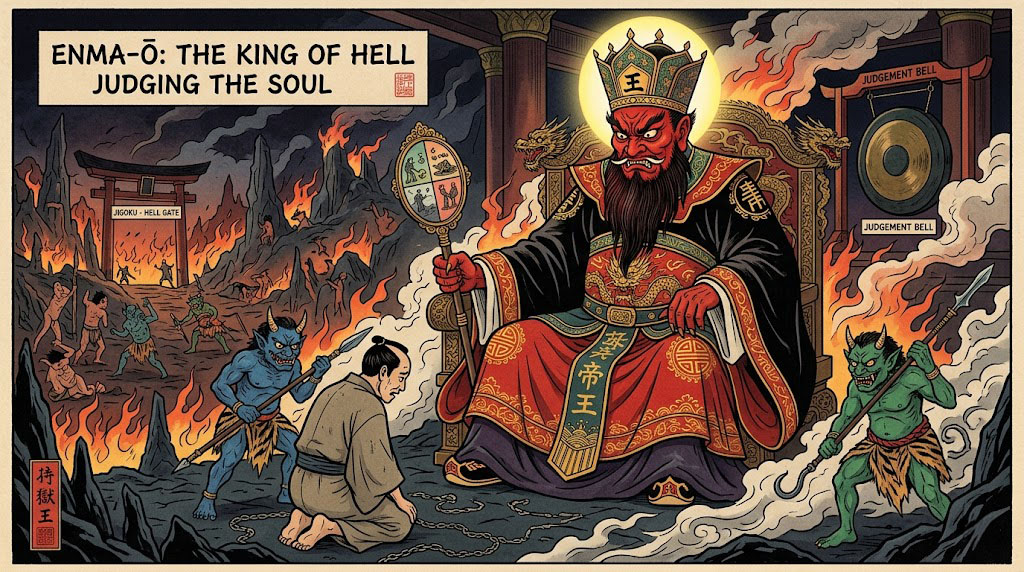
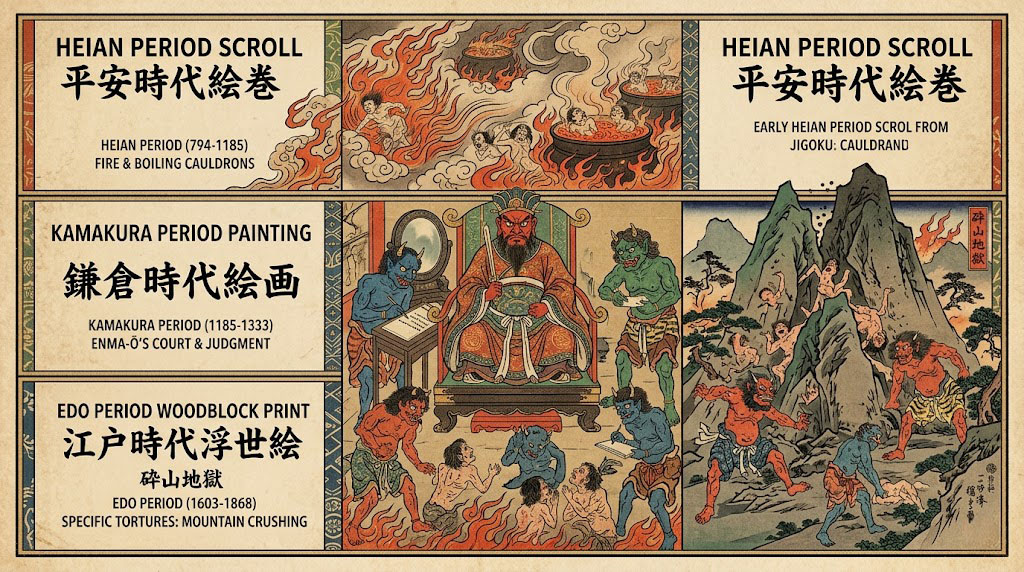
Over centuries, these imported Buddhist doctrines blended and sometimes clashed with local Japanese spiritual practices and folklore, leading to unique interpretations. For instance, while the core ideas of karma and the Six Realms remained consistent, specific depictions of Jigoku, the judges of the underworld like Enma-ō (閻魔大王), and the journey of the soul through Meido (冥土), the realm of the dead, developed distinctively Japanese characteristics. Monks and artists produced elaborate scrolls (Jigoku-e, 地獄絵) and sermons that graphically illustrated the horrors of hell, serving as powerful moral deterrents and artistic expressions, ensuring that the beliefs of Rinne and Jigoku became deeply ingrained in the popular imagination across all social strata.
Jigoku: The Hells of Japanese Reincarnation Beliefs
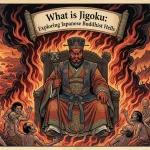
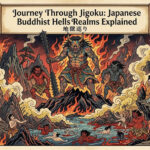
Within the Six Realms of Rinne, Jigoku (地獄), the Buddhist Hells, stands as the lowest and most feared destination. It’s not a place of eternal damnation in the Western sense, but rather a temporary (though incredibly long) purgatorial realm where souls endure unimaginable suffering to cleanse themselves of negative karma. The depictions of Jigoku are vivid and terrifying, designed to instill a profound sense of moral consequence. Souls arrive here based on their grave misdeeds in life, such as murder, theft, lying, or disrespecting parents, and are subjected to punishments directly corresponding to their sins.
The Eight Hot Hells and Eight Cold Hells
Japanese Buddhist cosmology describes numerous Jigoku, most notably the Eight Great Hot Hells and the Eight Great Cold Hells, each progressively more intense in its suffering. The Hot Hells feature unimaginable torment: the hell of repeated revival, where souls are cut and reformed; the hell of black ropes, where bodies are marked and sawn; the hell of crushing, where beings are ground between iron mountains; and the most severe, the Avīci (阿鼻地獄, Abi Jigoku), or ‘interminable’ hell, where the wicked burn for countless eons. The Cold Hells, conversely, subject souls to extreme freezing, from blisters to cracking and splitting flesh. Each of these realms is presided over by fearsome guardians, including Oni (鬼) demons, who execute the sentences under the watchful eye of Enma-ō, ensuring that every sin receives its just, albeit horrifying, retribution.
Karmic Consequences and Purification
The journey through Jigoku is intrinsically linked to the concept of karma (因果応報, Ingaōhō), the law of cause and effect. Every action, word, and thought in one’s life generates karmic energy, which determines the nature of future existences. Falling into Jigoku is a direct consequence of accumulating overwhelmingly negative karma. However, even the most agonizing suffering in Jigoku serves a purpose: purification. Once a soul has fully exhausted its negative karma through torment, it is reborn into a higher realm, often as an animal or a hungry ghost, continuing its journey through Rinne. This cyclical nature underscores the Buddhist emphasis on compassion, ethical conduct, and the possibility of spiritual progress, as even those in the deepest hell can eventually aspire to escape the cycle altogether and achieve liberation.
Japanese Reincarnation Beliefs vs Similar Concepts
| Feature | Japanese Buddhist Rinne (Reincarnation) | Shinto Afterlife (Yomi-no-Kuni) | Western Christian Afterlife (Heaven/Hell) |
|---|---|---|---|
| Type | Cyclical rebirth through Six Realms | Single destination, realm of the dead | Single destination, eternal reward/punishment |
| Domain | Moral actions (karma), spiritual purification | Purity/pollution, connection to ancestors | Faith, moral obedience, divine judgment |
| Danger Level | Severe suffering in Jigoku, endless cycle until enlightenment | Becoming a polluted spirit (arata-ma) if not properly honored | Eternal damnation in Hell, separation from God |
| How to appease | Accumulate good karma, practice Buddhist virtues, achieve enlightenment | Proper funerary rites, ancestral worship (obon), purification rituals | Repentance, faith in Jesus Christ, living a righteous life |
| Modern pop culture | Hozuki’s Coolheadedness, Shin Megami Tensei, Buddhist art | Noragami, Princess Mononoke, folklore-inspired media | Good Omens, The Divine Comedy adaptations, various films |
Japanese Reincarnation Beliefs in Modern Japan and Pop Culture
Despite Japan’s rapid modernization, the ancient concepts of Rinne and Jigoku continue to resonate deeply within its culture, albeit often in secularized or stylized forms. The imagery of Buddhist Hells and the concept of karmic retribution appear frequently in contemporary Japanese media, from educational materials warning children against misbehavior to complex narratives in popular entertainment. Anime and manga, in particular, often draw on these beliefs. Titles like “Hozuki’s Coolheadedness” humorously depict the bureaucratic workings of Jigoku, making Enma-ō and Oni demons surprisingly relatable characters. “Dragon Ball Z” famously features King Yemma (Enma-ō) as the gatekeeper to the afterlife, judging souls. Video games, such as the “Shin Megami Tensei” series, frequently weave Buddhist cosmological elements, including different realms and karmic choices, into their gameplay and narratives, captivating a global audience with their unique spiritual depth.
Beyond entertainment, the underlying ethical principles of karma—that good deeds lead to positive outcomes, and bad deeds lead to suffering—remain a quiet but persistent influence on Japanese society. While fewer people may strictly adhere to the literal belief in Jigoku, the cultural memory of these powerful narratives contributes to a societal emphasis on politeness, consideration, and avoiding causing trouble for others. The idea of ancestral spirits and their influence on the living, often linked to the transmigration of souls, is also a powerful aspect, particularly during annual festivals like Obon (お盆), where families welcome back the spirits of their ancestors.
Where to Experience This in Japan
To truly connect with the essence of Japanese reincarnation beliefs, a visit to certain temples and museums is highly recommended. For a direct encounter with Jigoku imagery, temples like Ryōtaku-ji (龍澤寺) in Shizuoka or Enryaku-ji (延暦寺) on Mount Hiei often house historic Jigoku-e (地獄絵) scrolls, vividly depicting the horrors of hell. Many temples also feature an Enma-dō (閻魔堂), a hall dedicated to Enma-ō, where his fearsome statue presides. For a more interactive experience, the Meigetsu-in Temple (明月院) in Kamakura, while serene, has subtle nods to the cycle of life and death. Additionally, the Tokyo National Museum occasionally exhibits ancient Buddhist art, including breathtaking portrayals of the Six Realms, offering a profound glimpse into the artistic and spiritual dimensions of these enduring Japanese beliefs.
Frequently Asked Questions
What is the difference between Shinto and Buddhist beliefs about the afterlife in Japan?
Shinto and Buddhist beliefs offer distinct perspectives on the afterlife in Japan. Shinto’s primary focus is on the present world and maintaining purity, with the afterlife often conceived as Yomi-no-Kuni (黄泉の国), a shadowy, polluted underworld where spirits reside, or as ancestral spirits who can still influence the living. Buddhism, conversely, introduces the intricate concept of Rinne (輪廻), a continuous cycle of rebirth through various realms (including Jigoku) driven by karma, with the ultimate goal of achieving enlightenment and escaping the cycle.
Do Japanese people still believe in Jigoku (Hell) today?
While literal belief in the existence of Jigoku as a physical place may vary widely among modern Japanese people, the cultural impact of these hell narratives remains strong. Many understand Jigoku metaphorically, as a consequence of bad actions in this life or as a representation of severe suffering. The moral lessons and vivid imagery of Jigoku still serve as cultural references and ethical frameworks, often appearing in art, literature, and even in everyday expressions to describe extremely difficult situations.
How does karma influence reincarnation in Japanese Buddhism?
In Japanese Buddhist reincarnation beliefs, karma (Ingaōhō) is the fundamental force that determines one’s destiny across lifetimes. Every action, word, and intention, whether good or bad, generates karmic seeds that ripen into consequences in future lives. Positive karma from virtuous deeds can lead to rebirth in higher, more favorable realms (like the human or heavenly realms), while negative karma from harmful actions can result in rebirth in lower, suffering realms, such as the animal realm, hungry ghost realm, or the various levels of Jigoku.
Can one escape the cycle of Japanese reincarnation (Rinne)?
Yes, escaping the cycle of Rinne (Rinne Tenshō) is the ultimate spiritual goal in Japanese Buddhism. This liberation is known as achieving nirvana (涅槃) or buddhahood (仏陀). It is attained through rigorous spiritual practice, cultivating wisdom, compassion, and ethical conduct, thereby extinguishing all desires and attachments that bind one to the cycle of rebirth. While challenging, the path to liberation is open to all, offering a profound message of hope and personal transformation within the framework of Japanese reincarnation beliefs.