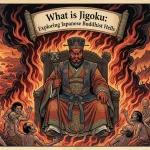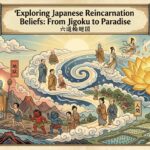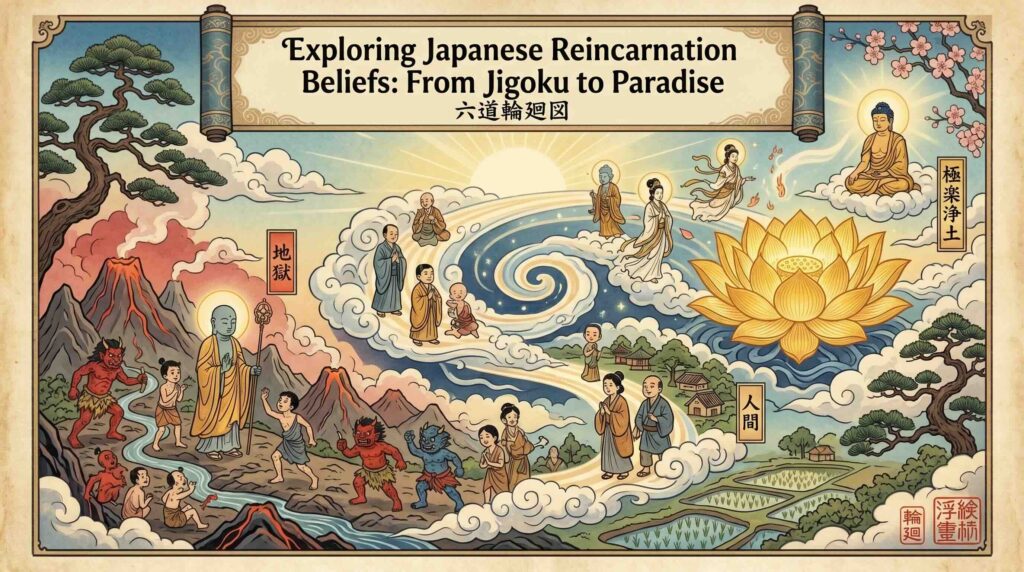
The Six Realms of Buddhism (Rokudō, 六道) form the cosmic framework of Buddhist rebirth — six planes of existence through which all beings cycle based on the karma they accumulate over countless lifetimes.
Imagine a journey beyond a single lifetime, a continuous cycle of birth, death, and rebirth spanning countless existences. This profound concept, known as reincarnation, lies at the very heart of Japanese spiritual understanding, deeply woven into the nation’s rich tapestry of Buddhist beliefs. Far from a simple passing, the afterlife in Japan is an intricate system of judgment, purification, and eventual return, where every action in this life ripples through the next. From the terrifying depths of Jigoku (地獄, Buddhist hell) to the blissful realms of paradise, the path a soul takes is determined by its karma, shaping its destiny in a breathtaking cosmic dance. Have you ever wondered what happens after death in Japan? What are the Japanese reincarnation beliefs that guide millions? This article will guide you through the captivating journey of the soul, revealing the fascinating intricacies of Japan’s unique vision of the cycle of existence, from ancient scriptures to modern cultural echoes.
What Are the Six Realms of Rebirth (Rokudō)?
The Six Realms (六道, Rokudō) are the six planes of existence into which beings are reborn in Japanese Buddhism, according to the karma they accumulate. Together they form the cycle of rebirth known as Rinne (輪廻) or samsara. From the heavenly Deva realm at the top to the tormented hells of Jigoku at the bottom, every realm is still part of this cycle of suffering — and the ultimate goal of Buddhist practice is not a better rebirth, but to escape the wheel entirely through enlightenment.
Quick Facts: Japanese Reincarnation Beliefs
| Detail | Information |
|---|---|
| Japanese Name | 輪廻 (Rinne) / 六道 (Rokudō) |
| Type / Category | Buddhist Concept / Afterlife Cosmology |
| Origin | Introduced to Japan with Buddhism (6th century CE) |
| Element / Domain | Spirituality, Karma, Morality, Purification |
| Known For | The cyclical nature of existence (samsara), where souls are reborn into one of six realms based on accumulated karma, including the potential for suffering in Jigoku. |
| Modern Appearances | Anime (e.g., Naruto, InuYasha), manga, films (e.g., Jigoku), traditional festivals (O-Bon), temple art. |
What Is Japanese Reincarnation?
At its core, Japanese reincarnation, or Rinne (輪廻), is the direct spiritual descendant of the Buddhist concept of samsara. This eternal cycle posits that living beings—not just humans, but all sentient life—are bound to a continuous loop of birth, death, and rebirth. Unlike some Western interpretations of reincarnation that might focus solely on returning as a human, the Japanese understanding, deeply rooted in Mahayana Buddhism, embraces a vast cosmology where souls can be reborn into various states of existence, determined by their accumulated karma (業, go or karma). This isn’t necessarily a benevolent journey; suffering is inherent in samsara, and the ultimate goal for many practitioners is to break free from this cycle and achieve enlightenment.
The concept became a cornerstone of spiritual life after Buddhism’s introduction to Japan in the 6th century CE. It offered a comprehensive framework for understanding causality, morality, and destiny, shaping not only religious practices but also ethical codes and social norms. The belief in a continuous cycle emphasized the interconnectedness of all life and the long-term consequences of one’s actions, encouraging compassionate behavior and the pursuit of spiritual merit. For the Japanese, life on Earth is but one phase in an endless spiritual progression, with the choices made in this lifetime directly influencing the next.
Origins and History
The seeds of Japanese reincarnation beliefs were sown with the arrival of Buddhism from continental Asia, primarily via Korea and China, around the Kofun period. Initially, Shinto, Japan’s indigenous religion, focused more on ancestral spirits (kami, 神) and the purification of the present world, with less emphasis on a structured afterlife cosmology. However, Buddhism brought with it a sophisticated doctrine of causality, rebirth, and a detailed understanding of the heavens and hells. Over centuries, these two spiritual traditions syncretized, creating a uniquely Japanese perspective on the afterlife that blended native reverence for nature and ancestors with Buddhist karmic principles.
Early Buddhist texts and teachings, particularly those describing the Six Realms of Existence (Rokudō, 六道) and the various states of Jigoku, captivated the Japanese imagination. Figures like Prince Shōtoku (574–622 CE) played a pivotal role in promoting Buddhism, thereby embedding these concepts into the nascent Japanese state and aristocratic society. As Buddhism spread to the common people, tales of karmic retribution and the potential for rebirth into higher or lower realms became powerful moral tools, influencing everything from folk tales to formal legal systems. The detailed maps of Jigoku and the journey of the soul, often depicted in vibrant scrolls and temple art, served as vivid reminders of the cycle of Rinne.
The Cycle of Samsara and Jigoku in Japan
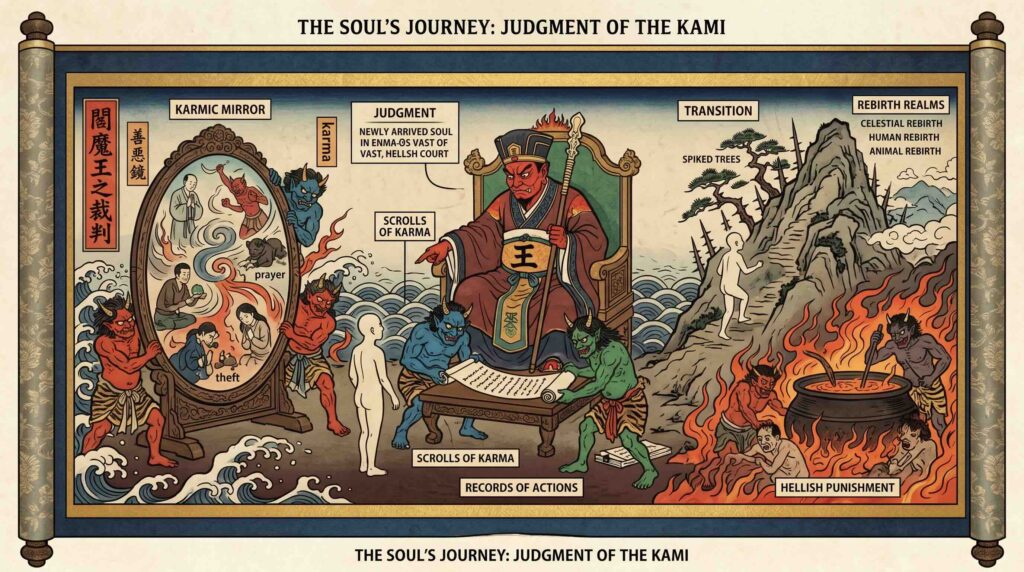
The practical application of Japanese reincarnation beliefs hinges on the concept of karma (業, go), the sum of a person’s actions and intentions in this life. Good deeds accumulate positive karma, leading to a favorable rebirth, while negative actions incur negative karma, potentially resulting in a less desirable future existence. Upon death, it is believed that souls undergo a period of judgment, often presided over by Enma-Ō (閻魔王), the King of Hell. This judgment determines which of the six realms of existence, known as the Rokudō (六道), a soul will be reborn into, thus continuing the cycle of samsara (輪廻転生, rinne tenshō, literally “cycle of birth and death”).
The Six Realms of Existence (Rokudō)
The Rokudō are the core destinations in the Japanese Buddhist understanding of reincarnation. They are not static heavens or hells but rather transient states of being, each presenting its own challenges and opportunities for growth. The realms are:
1. Deva Realm (天道, Tendō): The realm of gods and celestial beings, characterized by pleasure and long life, but still subject to rebirth and eventual suffering.
2. Asura Realm (修羅道, Shuradō): The realm of jealous demigods and warring titans, marked by constant conflict and anger, representing pride and hostility.
3. Human Realm (人間道, Ningendō): Our current world, considered the most precious realm for achieving enlightenment due to its balance of pleasure and suffering.
4. Animal Realm (畜生道, Chikushōdō): The realm of animals, characterized by ignorance, instinct, and a lack of moral understanding.
5. Preta Realm (餓鬼道, Gakidō): The realm of hungry ghosts, driven by insatiable cravings and depicted with distended bellies and tiny mouths, representing extreme greed.
6. Jigoku Realm (地獄道, Jigokudō): The lowest realm, Buddhist hell, a place of intense suffering and purification for those who committed severe negative karma. It encompasses various sub-hells, each with specific torments tailored to particular sins.
The Role of Enma-Ō and Judgement
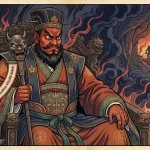
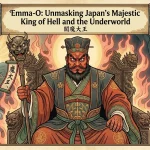
Central to the journey through Jigoku and the determination of one’s next rebirth is Enma-Ō (閻魔王), often depicted as a fearsome, red-faced king with a stern expression and a long beard, holding a ceremonial staff. Enma-Ō is the chief judge of the underworld, presiding over a bureaucratic court of other judges and demonic assistants. According to popular belief, upon death, a soul spends seven days in a probationary period, followed by a series of judgments that occur every seven days for 49 days, and then at 100 days, one year, and three years.
During these judgments, Enma-Ō meticulously reviews the deceased’s karmic record, using the Kagami no Hari (業鏡, Mirror of Karma) to reflect all their past deeds, good and bad. Souls are then assigned their appropriate realm within the Rokudō, with those burdened by severe negative karma being sent to specific levels of Jigoku for purification through various torments. These beliefs underscore the moral accountability of individuals and the profound impact of their choices, serving as a powerful deterrent against wrongdoing and an incentive for virtuous living.
Japanese Reincarnation vs. Western & Other Buddhist Views
| Feature | Japanese Reincarnation (Buddhist) | Western Reincarnation (e.g., New Age) | Theravada Buddhist Reincarnation |
|---|---|---|---|
| Type | Karma-driven rebirth into one of Six Realms (Rokudō) | Soul’s progression/learning through multiple human lives | Dependent Origination (Paticca-samuppāda) leading to rebirth |
| Domain | Moral and spiritual causality, purification in Jigoku | Personal growth, spiritual evolution, past life regression | Suffering (Dukkha), impermanence (Anicca), non-self (Anatta) |
| Danger Level | Severe suffering in Jigoku for negative karma, risk of lower realms | Generally positive, seen as opportunity for growth, less emphasis on ‘hell’ | Rebirth itself is suffering, aim is to escape the cycle, no specific ‘hell’ king |
| How to appease | Accumulate good karma (積善, shakuzen), devotion to Buddhas/Bodhisattvas, memorial rites (供養, kuyō) | Self-improvement, learning from past lives, spiritual practices, meditation | Cultivate morality (sila), meditation (samadhi), wisdom (panna); follow the Noble Eightfold Path |
| Modern pop culture | Anime (InuYasha, Jigoku Sensei Nūbē), temple art, ghost stories | Books on past lives, spiritual documentaries, personal anecdotes | Limited direct pop culture influence in West, more academic or philosophical discussion |
Reincarnation in Modern Japanese Culture and Pop Culture
Even in a technologically advanced society, Japanese reincarnation beliefs continue to exert a profound influence, albeit sometimes subtly, on modern Japanese culture. The concept of karma (業, go) remains deeply ingrained in the collective consciousness, often used colloquially to explain misfortune or unexpected luck. Phrases like “good karma” or “bad karma” are understood without direct religious reference, underscoring the enduring belief in cause and effect across lifetimes. The annual O-Bon festival (お盆), a major summer celebration, perfectly encapsulates this; families return to their ancestral homes to honor the spirits of their ancestors, believing that these spirits return to the living world for a brief period, embodying a form of temporary rebirth or visitation from the other side.
In pop culture, Japanese reincarnation beliefs are a wellspring of inspiration, particularly in the realm of anime, manga, and video games. Series like InuYasha explore reincarnation across different eras, while shows such as Naruto delve into the reincarnation of powerful spirits and ancestors, influencing the destinies of protagonists. Even darker themes, like the consequences of actions leading to suffering in Jigoku, appear in horror films and traditional ghost stories (怪談, kaidan), serving as moral parables. This continuous engagement ensures that the intricate concepts of samsara, karma, and the Rokudō remain relevant, not just as ancient doctrines but as dynamic narratives that resonate with both Japanese audiences and an international fanbase intrigued by Japan’s unique spiritual depth.
Where to Experience Related Concepts in Japan
For travelers interested in connecting with Japanese reincarnation beliefs and the afterlife, several places offer profound insights:
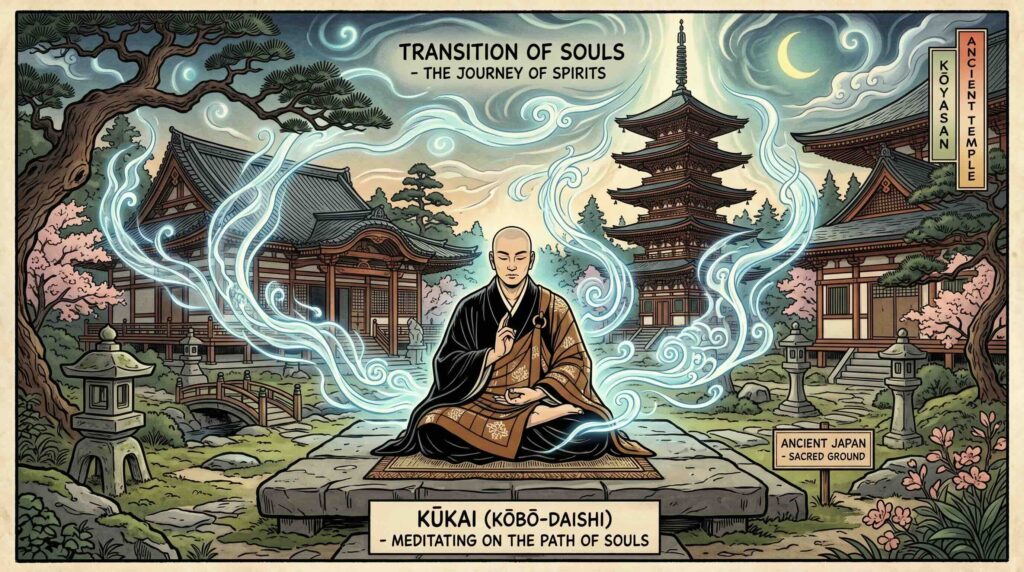
1. Mount Koya (高野山, Kōyasan): A sacred Buddhist mountain and a UNESCO World Heritage site, home to numerous temples and Okunoin cemetery, where Kōbō-Daishi (Kūkai) is believed to be in eternal meditation, awaiting the future Buddha. It’s a powerful site for contemplating death and spiritual continuity.
2. Daihōon-ji Temple (大報恩寺, Daihōon-ji) in Kyoto: Known for its vibrant collection of Buddhist hell scrolls (Jigoku-e), which graphically depict the torments of Jigoku and serve as potent visual sermons on karma and rebirth.
3. Tokugawa Art Museum (徳川美術館, Tokugawa Bijutsukan) in Nagoya: This museum occasionally exhibits rare and historically significant Jigoku-e scrolls, offering a glimpse into how these beliefs were depicted and understood across centuries.
Frequently Asked Questions
What is the difference between Japanese reincarnation and the Western concept of rebirth?
The main difference lies in the destination and purpose. Japanese reincarnation, rooted in Buddhism, typically involves rebirth into one of six realms (Rokudō), not exclusively human. The goal is to escape the cycle of suffering (samsara). Western concepts often focus on the soul’s progression through multiple human lives for personal growth, with less emphasis on a structured system of hells or animal realms as potential destinations.
How does karma play a role in Japanese reincarnation beliefs?
Karma (go) is the fundamental principle. Every thought, word, and action, positive or negative, accumulates karmic merit or demerit. This accumulated karma determines the nature of a soul’s next rebirth—whether it will be into a higher, more pleasant realm or a lower, more suffering-filled one like Jigoku. Good deeds are believed to lead to a favorable rebirth, while bad deeds result in adverse consequences.
Is Jigoku (Buddhist Hell) a permanent destination in Japanese reincarnation?
No, Jigoku is not a permanent destination. While depicted as a place of intense suffering and purification, it is ultimately a temporary state within the cycle of samsara. Souls undergo torments tailored to their accumulated negative karma, but once their karmic debt is expiated, they can be reborn into higher realms. The purpose of Jigoku is purification and learning, not eternal damnation.
Can people break free from the cycle of Japanese reincarnation (samsara)?
Yes, breaking free from the cycle of samsara and achieving enlightenment (satori or nirvana) is the ultimate goal in Japanese Buddhism. This liberation is attained through deep spiritual practice, understanding the true nature of existence, cultivating compassion, and eradicating desires and attachments. While difficult, it is believed to be possible for any being within the Rokudō, particularly from the human realm, through dedicated effort and wisdom.