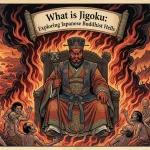
Imagine a realm where the consequences of every negative action committed in life are meticulously weighed, and punishment is meted out with a chilling precision designed to purify the soul. This isn’t just a grim fantasy; it’s the profound and elaborate concept of Jigoku (地獄, jigoku), the Japanese Buddhist hell realms. For centuries, these vivid depictions of suffering and karmic retribution have shaped Japanese spiritual beliefs, inspired countless artworks, and served as powerful cautionary tales. From the icy wastes to the scorching cauldrons, each layer of Jigoku offers a unique and terrifying mirror to human failings, all presided over by the formidable Lord Enma-ō. Prepare to journey into the depths of Japan’s spiritual underworld as we unravel the intricate cosmology, fearsome inhabitants, and enduring cultural impact of these extraordinary realms.
Quick Facts: Japanese Buddhist Hell Realms
| Detail | Information |
|---|---|
| Japanese Name | 地獄 (jigoku) |
| Type / Category | Buddhist Concept / Afterlife Realm |
| Origin | Ancient Indian Buddhism, integrated and adapted into Japanese culture. |
| Element / Domain | Suffering, Judgment, Retribution, Purification |
| Known For | Complex system of multiple hells, karmic punishment for negative deeds, ruled by Enma-ō and the Ten Kings. |
| Modern Appearances | Traditional art, anime (e.g., “Hozuki’s Coolheadedness”), manga, video games, literature, temple art. |
What Is Jigoku?
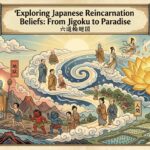
Jigoku, meaning “earth-prison” or “hell,” refers to the various realms of suffering and punishment within Japanese Buddhist cosmology. These are not permanent destinations in the Christian sense, but rather temporary states of existence for souls to purify themselves of negative karma before rebirth into another of the Six Realms of Rebirth (六道, rokudō) – a cycle known as samsara. The concept of Jigoku is deeply rooted in Buddhist doctrines of cause and effect (karma), where virtuous actions lead to favorable rebirths, while evil deeds result in descent into these lower, painful realms.
The complexity of Jigoku is astounding, often depicted as a multi-layered underworld, each hell corresponding to specific transgressions and offering appropriate, gruesome torments. These vivid depictions serve not merely as theological constructs but as moral compasses, encouraging adherence to Buddhist precepts by illustrating the dire consequences of greed, anger, ignorance, and other vices. The suffering endured in Jigoku is believed to cleanse the soul, allowing for eventual re-entry into a higher realm, thus emphasizing a path towards liberation rather than eternal damnation.
Origins and History
The concept of hell realms originated in ancient Indian Buddhism, with early sutras describing various types of suffering realms. When Buddhism arrived in Japan in the 6th century, these ideas were enthusiastically adopted and integrated, often blending with existing native Shinto beliefs about the underworld (Yomi). Over centuries, Japanese artists, monks, and storytellers elaborated upon these descriptions, creating a uniquely Japanese vision of Jigoku that is both terrifying and deeply didactic.
Texts like the Ōjōyōshū (往生要集, “Essentials for Rebirth in the Pure Land”) by Genshin in the 10th century played a pivotal role in popularizing and detailing the horrors of Jigoku. Genshin’s vivid descriptions, intended to frighten people into pious living and seeking rebirth in Amida Buddha’s Pure Land, profoundly influenced Japanese art, literature, and religious thought for generations. This rich historical development transformed a foreign concept into an indelible part of the Japanese spiritual landscape, with countless scrolls, paintings, and temple sculptures bringing Jigoku to life.
Jigoku’s Appearance, Torments, and Sentences
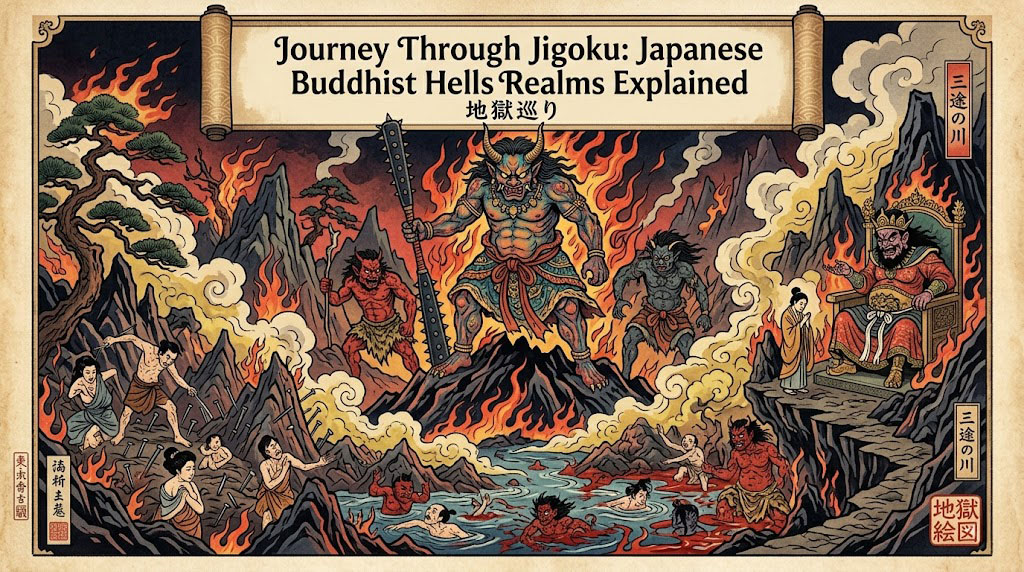
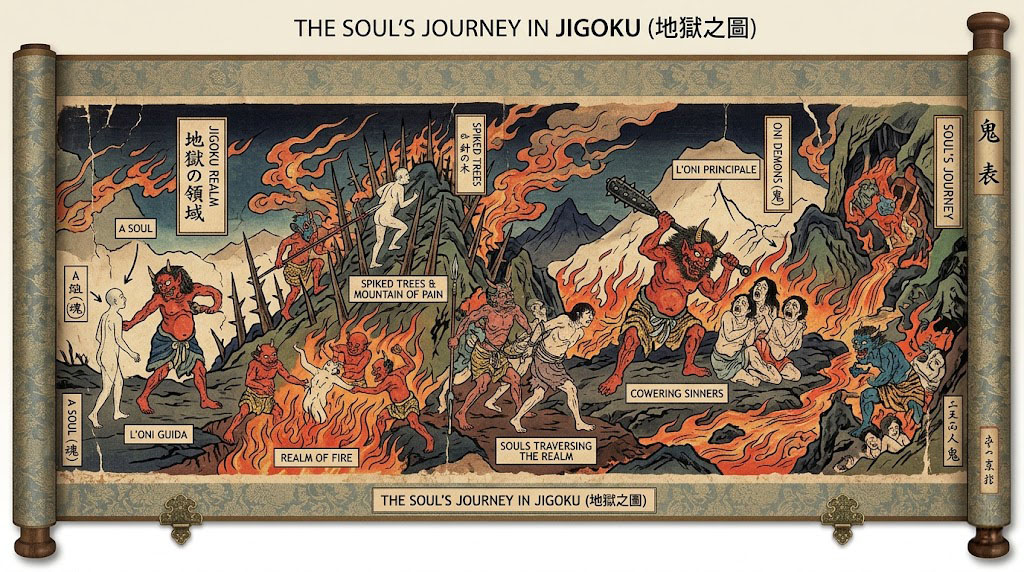
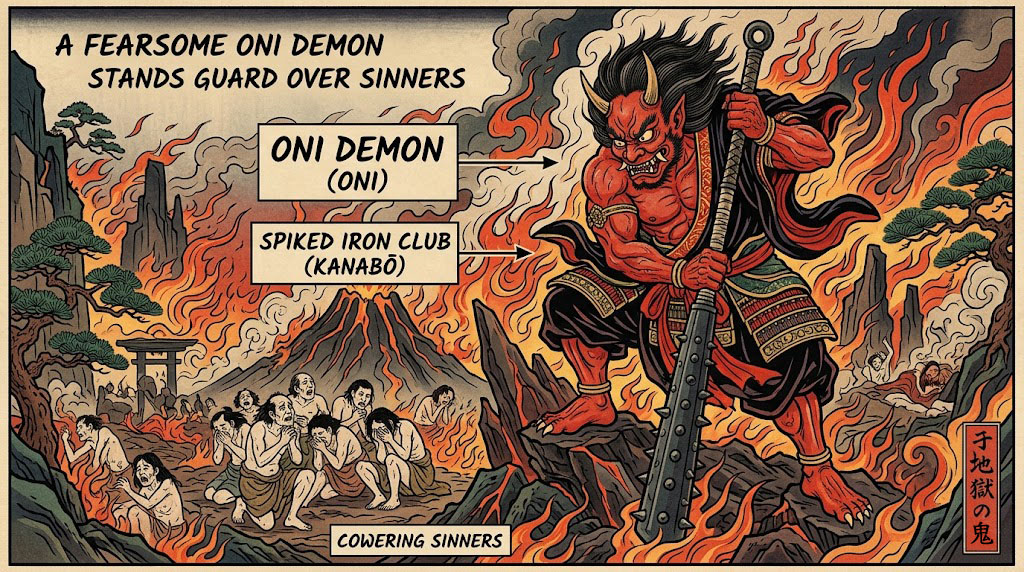
Jigoku is not a monolithic entity but a collection of distinct realms, each designed to punish specific transgressions. These realms are typically envisioned as subterranean, filled with landscapes of extreme suffering: mountains of swords, rivers of boiling mud, forests of iron trees with razor-sharp leaves, and desolate plains of ice. The suffering inflicted by menacing demons known as oni (鬼, oni) and the guardians of hell is tailored to the sins committed, from being boiled alive for murder to having one’s tongue pulled out for lying. The sounds of Jigoku are often described as wails of agony, the clang of chains, and the roar of infernal fires, creating an oppressive and terrifying atmosphere.
The Eight Great Hot Hells and Eight Great Cold Hells
The most commonly described divisions of Jigoku are the Eight Great Hot Hells and the Eight Great Cold Hells. The Hot Hells, such as the Hell of Repeated Revival (等活地獄, Tōkatsu Jigoku) or the Hell of Intense Heat (大熱地獄, Dainaketsu Jigoku), punish those guilty of violence, murder, or sexual misconduct, subjecting them to endless cycles of torture, burning, and resurrection. The Cold Hells, like the Hell of Blue Lotuses (青蓮地獄, Shōren Jigoku) or the Hell of Great Lotuses (大紅蓮地獄, Daigūren Jigoku), are reserved for those who commit exceptionally grave sins, plunging them into unimaginably frigid landscapes where their bodies crack and freeze like icy lotuses.
Enma-ō and the Ten Kings of Hell
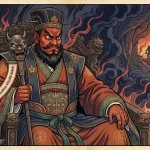
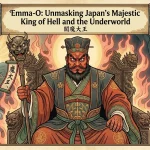
Presiding over this vast network of suffering is Enma-ō (閻魔王, Enma-ō), the King of Hell and chief judge of the dead. Often depicted with a stern, red face, a long beard, and wielding a judgment scepter, Enma-ō determines the fate of souls based on the meticulous records kept by his scribes. He is assisted by the Ten Kings of Hell (十王, Jū-ō), a pantheon of Buddhist and Daoist deities who collectively judge the deceased at various stages over 49 days after death, and then on significant anniversaries. Each king presides over a specific court, examining the karma of the departed and assigning them to an appropriate realm within Jigoku or a higher destination in samsara.
Jigoku vs Similar Afterlife Concepts
| Feature | Jigoku (Japanese Buddhism) | Yomi (Japanese Shinto) | Gaki-dō (Buddhist Hungry Ghost Realm) |
|---|---|---|---|
| Type | Karmic punishment realm, temporary | Land of the dead, murky and polluted | Realm of insatiable craving and hunger |
| Domain | Underworld, multiple specific hells | Subterranean, associated with decay | Often co-exists with human world, unseen |
| Danger Level | Extreme suffering, torment, purification | Unpleasant, defiling, no direct torment | Constant suffering from extreme hunger/thirst |
| How to appease | Accumulate positive karma, prayers, memorial rites | Avoidance, specific Shinto purification rituals | Offerings (food, water) from the living |
| Modern pop culture | Anime (“Hozuki’s Coolheadedness”), art | Folklore, myth, limited direct portrayal | Anime, folk tales (e.g., setsubun oni) |
Jigoku in Modern Japan and Pop Culture
Even in contemporary Japan, the imagery and concepts of Jigoku remain deeply ingrained in the cultural consciousness. While perhaps not always taken literally, the cautionary tales and vivid artistry continue to resonate. Jigoku appears frequently in anime and manga, often with a humorous or satirical twist, such as in “Hozuki’s Coolheadedness” (鬼灯の冷徹, Hozuki no Reitetsu), where the daily administrative challenges of hell are comically explored. Video games, traditional theatre, and even modern art installations continue to draw inspiration from the diverse and evocative imagery of Jigoku, making these ancient Buddhist hell realms surprisingly relevant.
The enduring appeal of Jigoku, both terrifying and fascinating, extends globally. Its intricate moral system and vivid imagery offer a unique perspective on justice, suffering, and the human condition. For international audiences, it provides a compelling entry point into Japanese spirituality and the rich tapestry of its folklore, illustrating how traditional beliefs continue to shape storytelling and art across the globe, inviting reflection on universal themes of consequence and redemption.
Where to Experience This in Japan
While you can’t visit Jigoku itself, several places in Japan offer fascinating glimpses into its artistic and historical depictions. Many Buddhist temples house stunning hell scrolls (地獄絵, jigoku-e) or statues of Enma-ō. Notable examples include Kōfuku-ji Temple in Nara, which historically housed important hell paintings. The Kyoto National Museum frequently features Jigoku-related artifacts in its exhibitions. For a more direct, albeit metaphorical, experience, consider visiting natural geothermal areas like Jigokudani (Hell Valley) in Noboribetsu, Hokkaido, or Beppu in Oita, Kyushu, where steaming vents and boiling mud pools evoke the intense landscapes of hell, often featuring statues of oni.
Frequently Asked Questions
What are the main types of Jigoku in Japanese Buddhism?
Japanese Buddhist cosmology typically describes eight great hot hells and eight great cold hells, along with numerous minor hells. The hot hells, such as the Hell of Repeated Revival and the Hell of Intense Heat, punish sins through fire, boiling, and brutal physical torment. The cold hells, including the Hell of Blue Lotuses and the Hell of Great Lotuses, involve extreme freezing and bodily cracking. Each specific hell realm is a distinct environment tailored to specific transgressions, providing a varied landscape of suffering for purification.
Who is Enma-ō and what is his role in Jigoku?
Enma-ō, often referred to as the King of Hell, is the formidable chief judge of the dead in Japanese Buddhist tradition. With his imposing appearance and solemn demeanor, he presides over the underworld courts, meticulously weighing the karma of each deceased soul. Supported by the Ten Kings of Hell and his scribes, Enma-ō determines where a soul will be reborn within the Six Realms, assigning those with negative karma to the appropriate level of Jigoku for purification before their eventual rebirth.
Can people escape from Jigoku, according to Buddhist teachings?
Yes, according to Buddhist teachings, the suffering in Jigoku is not eternal. It is a temporary realm of karmic purification. Once a soul has sufficiently expiated its negative karma through the intense suffering of Jigoku, it can then be reborn into a higher realm within the cycle of samsara. This concept highlights Buddhism’s emphasis on eventual liberation and the impermanence of all states of existence, including even the direst of hells, offering a path towards ultimate enlightenment.
How does Jigoku differ from the Shinto concept of Yomi?
Jigoku, a Buddhist concept, is a realm of active karmic punishment and purification, governed by judges like Enma-ō, with specific torments for specific sins. It is a dynamic place where suffering serves a purpose. In contrast, Yomi (黄泉, Yomi), the traditional Shinto underworld, is primarily a gloomy, defiling land of the dead, not a place of moral judgment or active punishment. While unpleasant and associated with decay, Yomi lacks the structured system of karmic retribution and purification found in Jigoku, being more of a passive holding ground for spirits.