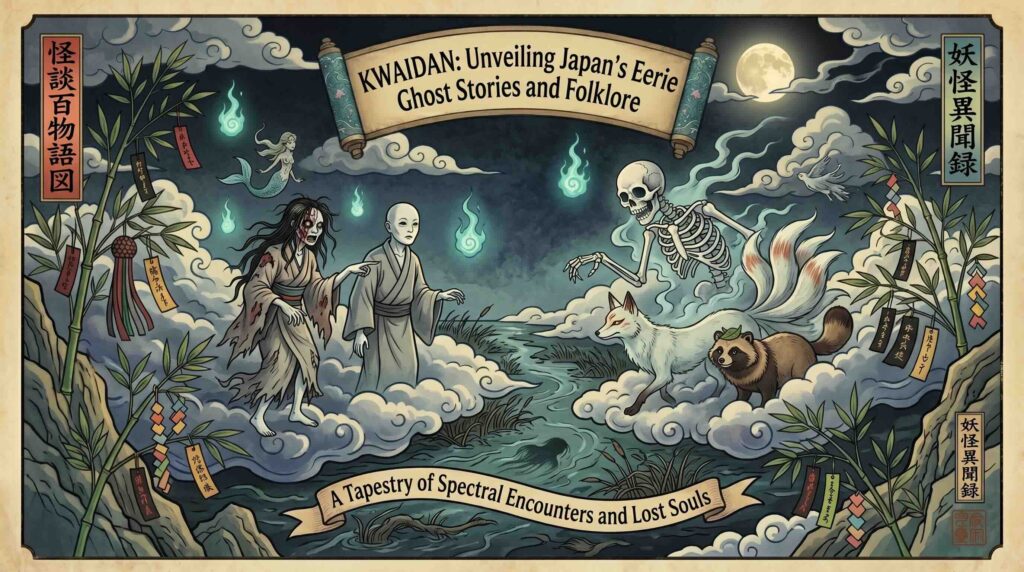
Kwaidan Japanese ghost stories are among the most haunting tales ever recorded — chilling supernatural narratives collected by Lafcadio Hearn that reveal the dark, spiritual heart of ancient Japan.
Imagine a quiet, moonlit night in Meiji-era Japan. The air is still, save for the rustle of leaves and the distant, mournful cry of an owl. Inside a dimly lit room, a Western scholar, captivated by the country’s ancient heart, listens intently as an elderly storyteller weaves tales of spectral lovers, vengeful spirits, and shape-shifting creatures. These are not mere campfire yarns; they are echoes of Japan’s deepest fears and profound spiritual beliefs, meticulously collected and beautifully rendered by Lafcadio Hearn. His groundbreaking work, ‘Kwaidan: Stories and Studies of Strange Things,’ became the definitive gateway for the world to discover the chilling elegance of Japanese ghost stories. But what exactly makes these tales so enduringly captivating, and how did a Greek-Irish writer become the West’s most celebrated interpreter of Japan’s supernatural realm? Prepare to delve into the spectral pages of ‘Kwaidan’ and uncover the secrets of its timeless allure.
Quick Facts: Kwaidan
| Detail | Information |
|---|---|
| Japanese Name | 怪談 (Kaidan) |
| Type / Category | Literary Collection / Supernatural Folklore |
| Origin | Meiji period Japan, compiled by Lafcadio Hearn |
| Element / Domain | Supernatural, Spirits, Folklore, Dreams, Death |
| Known For | Introducing Japanese ghost stories and traditional folklore to Western audiences, celebrated for its evocative prose and faithful portrayal of Japanese spiritual beliefs. |
| Modern Appearances | Influenced countless horror films, anime, manga, and literature; direct adaptations include Masaki Kobayashi’s 1964 film “Kwaidan.” |
What Is Kwaidan?
Kwaidan (怪談, kaidan), literally meaning ‘strange story’ or ‘ghost story,’ refers broadly to traditional Japanese tales of the supernatural. However, when we speak of ‘Kwaidan’ in a specific literary context, we invariably refer to Lafcadio Hearn’s iconic 1904 collection, ‘Kwaidan: Stories and Studies of Strange Things.’ This seminal work comprises seventeen stories and a brief ethnographic essay, all meticulously gathered and translated by Hearn from various Japanese sources, including ancient texts, local legends, and personal anecdotes. Far more than simple horror tales, Hearn’s Kwaidan serves as a profound window into the Edo and Meiji period Japanese psyche, exploring themes of duty, love, revenge, karma, and the permeable veil between the living and the dead. It introduced an international audience to the unique aesthetics and moral landscapes of Japanese spiritual beliefs, establishing a benchmark for cross-cultural literary interpretation.
Origins and History
The concept of kaidan has deep roots in Japanese literary history, dating back centuries to collections like the 13th-century ‘Konjaku Monogatarishu’ (今昔物語集). However, it was Lafcadio Hearn (小泉八雲, Koizumi Yakumo), an extraordinary Greek-Irish writer who immigrated to Japan in 1890 and later became a naturalized Japanese citizen, who truly popularized the genre for the Western world. Immersing himself completely in Japanese culture, Hearn taught English at various institutions and married a Japanese woman, Setsu Koizumi, who became his primary source of traditional tales and folklore. His profound respect and understanding of Japanese sensibilities allowed him to translate and retell these stories with unparalleled accuracy and poetic grace, bridging the cultural gap. ‘Kwaidan’ was published posthumously, solidifying his legacy as an essential conduit for Japanese spiritual heritage to reach global recognition, profoundly influencing how the West perceives Japanese supernatural lore.
Kwaidan’s Appearance, Powers, and Behavior
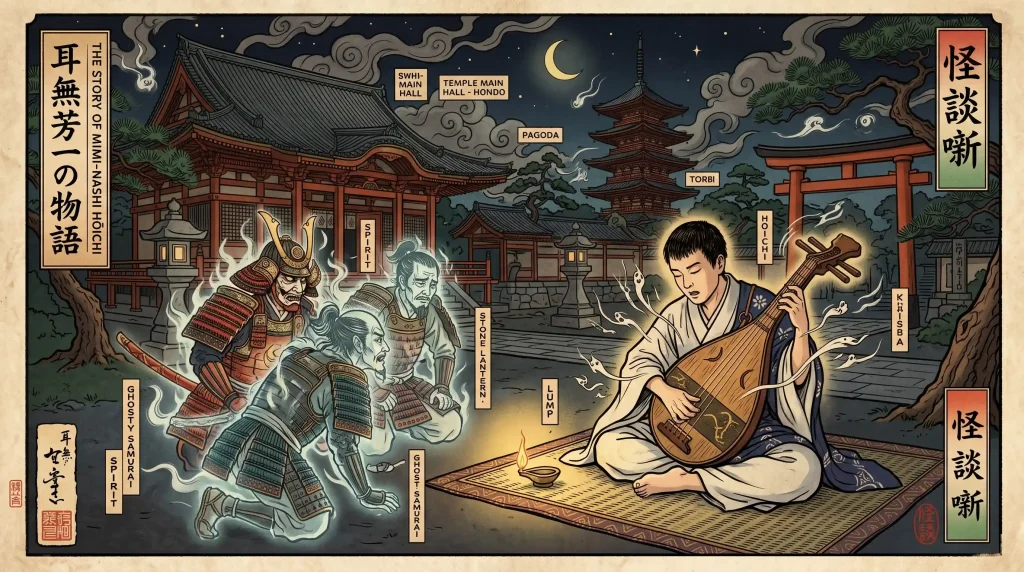
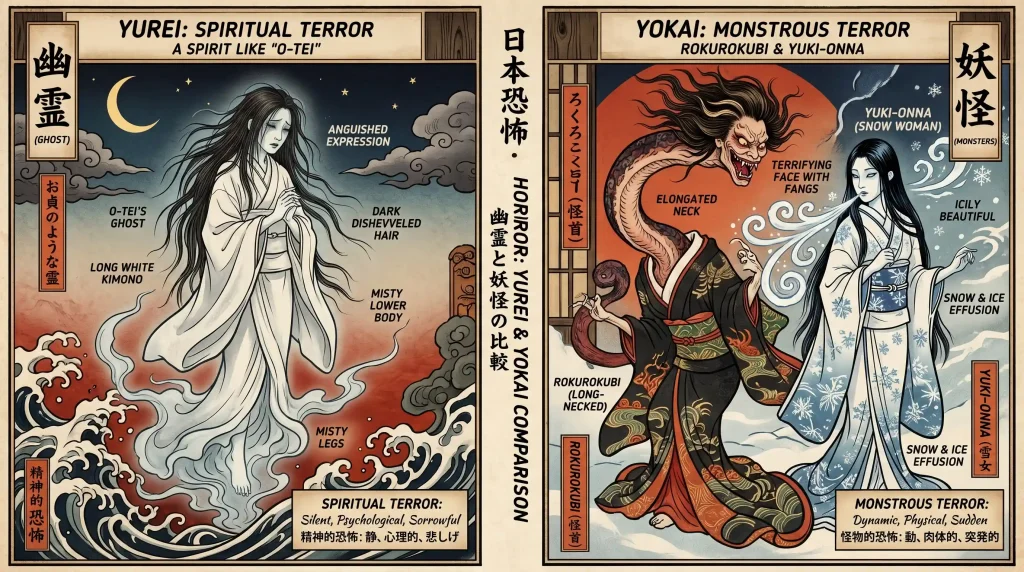
The spectral inhabitants of ‘Kwaidan’ are not the jump-scare monsters often found in Western horror. Instead, they are typically yūrei (幽霊), ethereal spirits of the deceased, often bound to the mortal realm by powerful emotions like unfulfilled love, profound grief, or burning vengeance. Hearn’s stories meticulously detail their appearances: sometimes transparent, often clad in white burial kimonos, with long, disheveled black hair—an iconic image that has since become synonymous with Japanese ghosts. These spirits are rarely purely evil; rather, they are tragic figures whose continued presence reflects unresolved earthly attachments or injustices. The eerie beauty of Hearn’s prose lies in his ability to convey the melancholic pathos of these entities, making their suffering palpable and their supernatural interventions both terrifying and profoundly moving. His descriptions of cold chills, flickering lights, and disembodied voices create an atmosphere of dread that is subtly unsettling rather than overtly shocking, a hallmark of traditional Japanese horror.
The Spectral Inhabitants of Kwaidan
Beyond the sorrowful yūrei, Hearn’s ‘Kwaidan’ also subtly introduces elements of yōkai (妖怪), the broader category of supernatural monsters, spirits, and demons. While yūrei are typically human ghosts, yōkai encompass a vast array of fantastical beings, from mischievous goblins to terrifying giants. In stories like ‘Rokurokubi,’ Hearn explores yōkai who blend seamlessly into human society, only revealing their monstrous nature under specific, often horrifying, circumstances. For instance, the Rokurokubi’s ability to stretch its neck to incredible lengths offers a unique brand of body horror, distinct from the tragic fate of a yūrei. Hearn’s nuanced approach in presenting both human spirits and more monstrous entities showcases the rich tapestry of Japanese folklore, highlighting the interconnectedness of human experience and the supernatural world. He masterfully depicts a reality where the boundary between the mundane and the miraculous is remarkably thin, where ancient beliefs permeate everyday life.
The Art of Storytelling in Kwaidan
What truly elevates ‘Kwaidan’ beyond a mere collection of scary stories is Lafcadio Hearn’s masterful approach to storytelling. He wasn’t just translating; he was interpreting, reshaping, and imbuing each narrative with his own poetic sensibility while remaining deeply respectful of the original cultural context. His prose is elegant and atmospheric, drawing readers into a world where beauty and terror coexist. Hearn’s introductions to each tale often provide a glimpse into the customs or beliefs that inform the story, offering invaluable cultural context to his Western audience. Furthermore, his narrative technique often builds suspense gradually, relying on psychological dread and the uncanny rather than explicit gore. This subtle artistry has ensured that ‘Kwaidan’ endures not just as a source of thrilling tales, but as a literary work of art that beautifully preserves and transmits the delicate nuances of Japanese spiritual thought and traditional narrative style to generations across the globe.
Kwaidan vs Other Japanese Ghost Story Collections
| Feature | Kwaidan (Lafcadio Hearn) | Ugetsu Monogatari (Ueda Akinari) | Otogi Bōko (Asai Ryōi) |
|---|---|---|---|
| Era of Publication | Meiji Period (1904) | Edo Period (1776) | Edo Period (1666) |
| Primary Author | Lafcadio Hearn | Ueda Akinari | Asai Ryōi |
| Focus | Folklore interpretation for West | Literary adaptation of folklore & history | Moralistic ghost stories, Buddhist themes |
| Tone | Poetic, melancholic, eerie | Refined, philosophical, often tragic | Didactic, cautionary, often gruesome |
| Cultural Impact | Introduced Japanese supernatural to West | Classic of Japanese gothic literature | Influenced early kaidan traditions |
Kwaidan in Modern Japan and Pop Culture
The impact of ‘Kwaidan’ on both Japanese and international culture cannot be overstated. Lafcadio Hearn’s evocative retellings ignited a global fascination with Japanese ghost stories, shaping the Western perception of Japanese supernatural horror for generations. His work provided the foundation for countless adaptations and inspirations in diverse media. Masaki Kobayashi’s critically acclaimed 1964 film ‘Kwaidan’ is a visually stunning direct adaptation, winning a Special Jury Prize at Cannes and introducing the tales to a new cinematic audience. Beyond direct adaptations, the aesthetic and thematic elements of Hearn’s stories — the vengeful yūrei, the melancholic atmosphere, the focus on psychological dread over explicit violence — have permeated modern Japanese horror. From the unsettling spirits of ‘Ringu’ (The Ring) and ‘Ju-On’ (The Grudge) to the nuanced folklore in anime like ‘Mushishi’ and video games such as ‘Fatal Frame,’ the echoes of Hearn’s Kwaidan resonate profoundly, reminding us that true terror often lies in the uncanny and the unseen, drawing on ancient fears that transcend cultural boundaries.
Where to Experience This in Japan
To truly connect with the spirit of ‘Kwaidan,’ a visit to Matsue (松江) in Shimane Prefecture is essential. Lafcadio Hearn spent a significant portion of his life here, and his former residence, now the Lafcadio Hearn Memorial Museum (小泉八雲記念館), offers a deep dive into his life and works. You can explore his house, see his personal effects, and gain insight into the world that inspired him. Nearby, the scenic Matsue Castle and its surrounding historical district evoke the very atmosphere of old Japan that Hearn cherished. While the stories themselves are timeless, walking the ancient paths and visiting the serene temples of Matsue can provide a palpable sense of the spectral beauty and deep cultural roots that define the enduring allure of Japanese ghost stories, much as Hearn experienced it centuries ago.
Frequently Asked Questions
Who was Lafcadio Hearn and why is ‘Kwaidan’ so important?
Lafcadio Hearn was a Greek-Irish writer who immigrated to Japan in 1890, became a naturalized Japanese citizen (Yakumo Koizumi), and dedicated his life to interpreting Japanese culture for the Western world. ‘Kwaidan’ is important because it was his most famous collection of Japanese ghost stories and traditional folklore, offering unprecedented insight into Japan’s supernatural beliefs and literary traditions. It introduced a global audience to the unique aesthetics of Japanese horror, distinct from Western narratives, and remains a seminal work in cross-cultural literary exchange.
Are the stories in ‘Kwaidan’ based on real Japanese legends or are they original?
The stories in ‘Kwaidan’ are overwhelmingly based on authentic Japanese legends, folktales, and historical accounts, rather than being original creations by Hearn. He diligently collected these tales from various sources, including ancient texts, local storytellers, and his Japanese wife, Setsu Koizumi. Hearn then retold them with his distinctive literary flair and deep cultural understanding, ensuring they remained true to their Japanese origins while being accessible and captivating for Western readers. This dedication to cultural fidelity is a major reason for the collection’s lasting significance.
What kind of supernatural entities or themes can I expect to find in ‘Kwaidan’s Japanese ghost stories?
In ‘Kwaidan,’ readers will primarily encounter yūrei (ghosts of deceased humans), often appearing as melancholic figures bound by unfulfilled love, revenge, or tragic circumstances. You’ll also find some yōkai, such as the shape-shifting Rokurokubi or the terrifying Yuki-onna (snow woman), who represent a broader category of supernatural beings. The themes explored are rich and varied, including duty, sacrifice, the consequences of betrayal, the power of love beyond death, and the thin veil between the mortal and spirit worlds, often imbued with Buddhist concepts of karma and impermanence.
How has ‘Kwaidan’ influenced modern Japanese horror films and literature?
‘Kwaidan’ has profoundly influenced modern Japanese horror, establishing many of the genre’s enduring tropes and atmospheric elements. The iconic image of the long-haired, white-clad female ghost, so prevalent in films like ‘Ringu’ and ‘Ju-On,’ owes much to Hearn’s descriptions of yūrei. Beyond aesthetics, the collection’s emphasis on psychological dread, subtle unsettling encounters, and the exploration of spiritual and moral consequences rather than overt gore, laid a foundational blueprint. It continues to inspire creators by showcasing the depth and terror found in traditional Japanese folklore and the enduring power of its spectral narratives.